
Review · HO CHI MINH CITY SCOOTER TOURS
Saigon Afternoon Excursion by Scooter
Ho Chi Minh City makes the most sense from the back of a scooter, where narrow lanes, food stalls, flower sellers, and old apartment blocks pass close enough to touch. This four-hour private ride takes you beyond the usual center, from the Thich Quang Duc monument and a wartime bunker to Chinatown, a floating market, and a meal in District 4.
I like the small private format, since your driver can focus on your questions and adjust the pace for your group. I also like the mix of history and ordinary city life: you get coffee at a corner shop, work through alleys, see flowers bound for sale across the city, and meet the older Chinese quarter through its temple and church.
The main consideration is traffic. You will spend much of the afternoon on a motorbike, and the route includes several stops rather than long visits at one major sight. If you want a quiet, museum-heavy tour, this is not the best fit. If you want to see how Saigon works at street level, it offers strong value for $26.
Key points to know before booking
- Thich Quang Duc monument: Begin with the story of the monk whose self-immolation protested the South Vietnamese government’s policies.
- 1968 weapons bunker: See the small bunker connected with the attack on the Independence Palace.
- Old neighborhoods by scooter: Reach the Nguyen Thien Thuat apartment area and flower market through lanes that are hard to cover efficiently on foot.
- Chinese heritage in District 5: Visit Thien Hau Temple, built by Chinese residents in 1760, and an old church dating to 1865.
- Food and drinks included: Vietnamese coffee, fresh coconut juice, and one meal of spring roll vermicelli are part of the outing.
- Practical setup: Hotel pickup, an open-faced helmet, raincoat if needed, accident insurance, and a private English-speaking driver are included.
Why a scooter is the right tool for this Saigon route
This is not a sightseeing loop built around famous postcard stops. It is a cross-section of Ho Chi Minh City, and the scooter makes the connections possible in a short afternoon.
You ride through District 3, District 5, the floating market area, and District 4. The route moves between political memory, religious buildings, old housing, commerce, and food. On foot, you would spend much of your time crossing wide roads or arranging separate rides. In a car, you would miss the close view of alleys and street corners. From the back of a scooter, you are at street level without having to manage the traffic yourself.
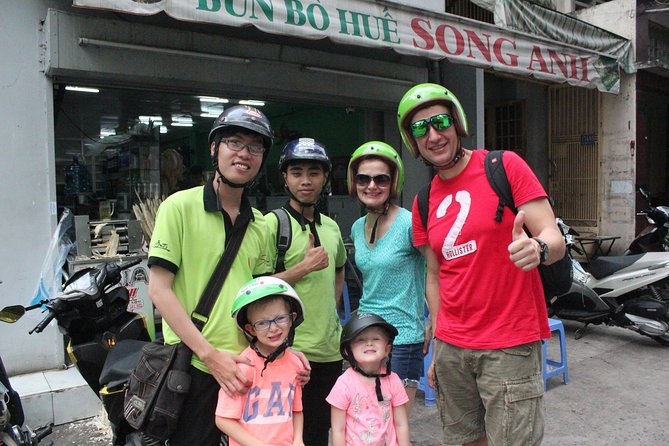
The tour begins at 1:00pm with pickup at your hotel or another agreed location. Your driver provides a high-quality open-faced helmet, and a raincoat is available if needed. The activity lasts about four hours, and only your group participates, which gives the afternoon a more personal feel than a large bus tour.
The English-speaking driver is both your transport and your guide. Chow is one named guide associated with the experience, and the available feedback specifically praises his punctual arrival, friendly manner, professional approach, and careful driving. That kind of communication matters here. You are not simply hiring a scooter ride. You are relying on someone to explain sensitive history and guide you through Saigon traffic.
A few more scooter tours around Ho Chi Minh City worth a look
- Ho Chi Minh City: Food Tour by Scooter with Eleven Tastings
★ 5.0 · 1,502 reviews - Saigon: City Highlights and Saigon Unseen Scooter Combo Tour
★ 4.9 · 1,366 reviews - Afternoon Saigon Unseen Adventure by Scooter |Opt: Ao Dai Riders
★ 5.0 · 1,282 reviews
Thich Quang Duc and the difficult opening to modern Saigon
The first stop takes you to District 3 and the monument to Thich Quang Duc. In 1963, the Buddhist monk set himself on fire in protest against the South Vietnamese government’s treatment of Buddhists. The event became one of the most recognized images of the Vietnam War era.
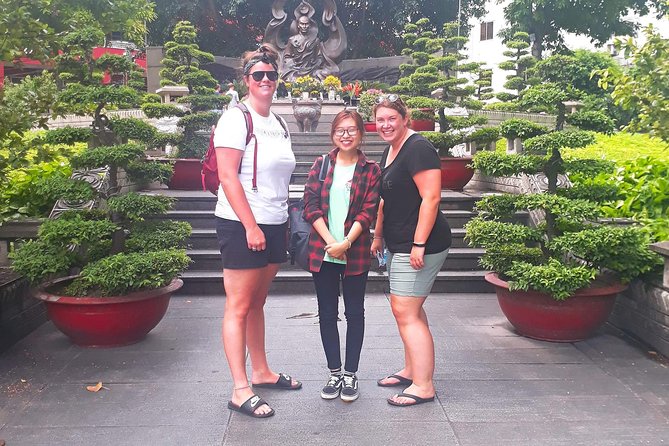
The statue gives the story a physical setting rather than leaving it as a name in a history book. Your stop lasts about 20 minutes, so expect a focused explanation and time to look around, not a long formal lecture. This is a useful beginning because it introduces the political tension that shaped the city before the better-known events of 1975.
You may find the stop emotionally heavy. The monument is not simply a photo opportunity, and the subject deserves a little quiet attention. Ask questions if you want more context, especially if you know little about the division between North and South Vietnam or the religious conflict of the period.
The next historical stop concerns the 1968 attack on the Independence Palace. The tour visits a bunker containing weapons connected with that operation. It is a small-scale site, but that is part of its value. You are looking at a tucked-away remnant of wartime planning rather than a large, polished museum display.
The bunker also shows how much of the city’s past is woven into ordinary neighborhoods. One moment you are riding along a busy road, and the next you are being shown a place connected with a major event. The visit is brief, so you should think of it as a sharp historical detail within a wider city tour.
Coffee, wet markets, and the Nguyen Thien Thuat apartments
The route then shifts from national history to daily life. At a local coffee shop on a street corner, you stop for Vietnamese coffee and watch the traffic pass. The included drink gives you a short break from the scooter, while the setting lets you observe how people use the street as an extension of home, shop, and workplace.
This is not presented as a specialty coffee tasting. The appeal is the ordinary setting. You sit at a local shop, take in the movement around you, and get a taste of the city’s coffee habit without spending time in a polished tourist café.
From there, the driver takes you through a wet market and toward the city’s biggest flower market. The market supplies flowers across Ho Chi Minh City, with hundreds of varieties passing through its stalls. You may see the practical side of the trade: flowers arriving, being sorted, bundled, and prepared for delivery.
The flower market can be one of the most rewarding sections for anyone interested in local commerce. It is not arranged for sightseeing, and the activity around you may be quick and crowded. That also means conditions can be less comfortable than at a formal attraction. Keep your belongings secure, follow your driver through the lanes, and expect to keep moving.
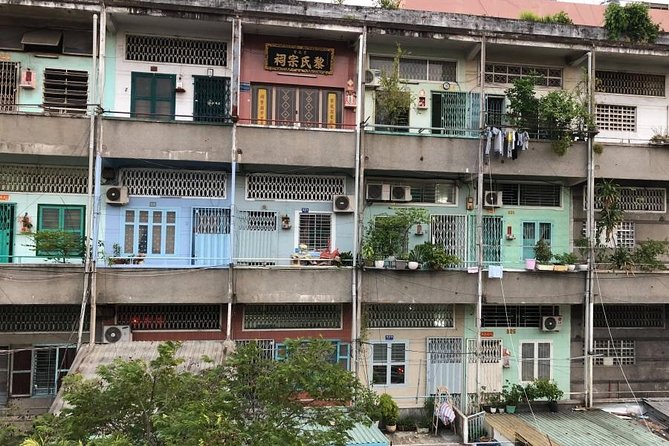
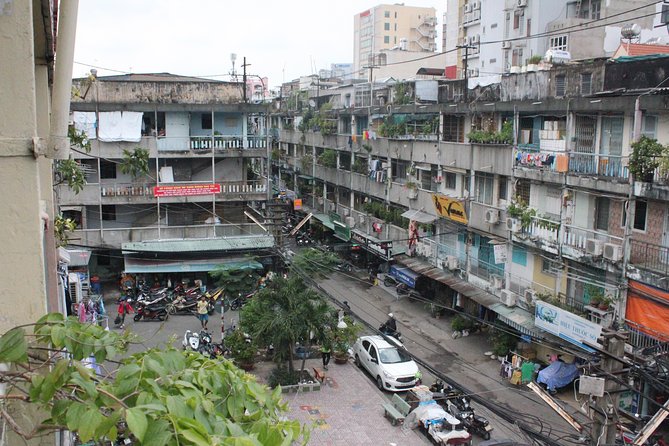
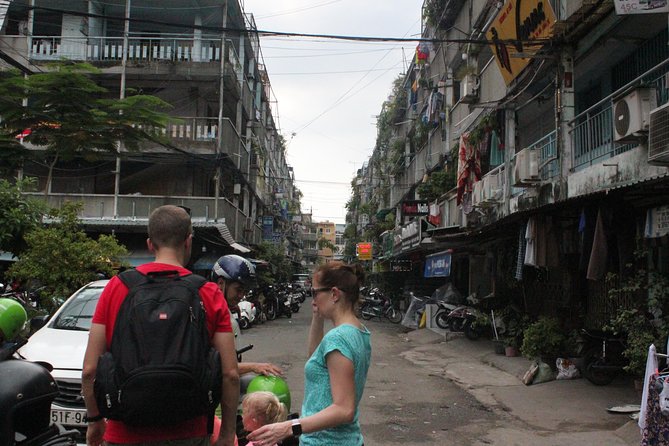
The Nguyen Thien Thuat area in District 3 adds another layer. The tour visits one of Ho Chi Minh City’s oldest apartment areas and uses alleys to reach it. Old apartments can tell you more about the city’s changing population and housing patterns than a modern landmark can. You see how residents share narrow spaces, how businesses fit into tight streets, and how older buildings continue to serve daily needs.
The stop is especially useful if you want a city tour that looks beyond grand buildings. It is also one reason to choose a scooter over a standard sightseeing vehicle. Narrow access is part of the point.
Thien Hau Temple and the Chinese quarter in District 5
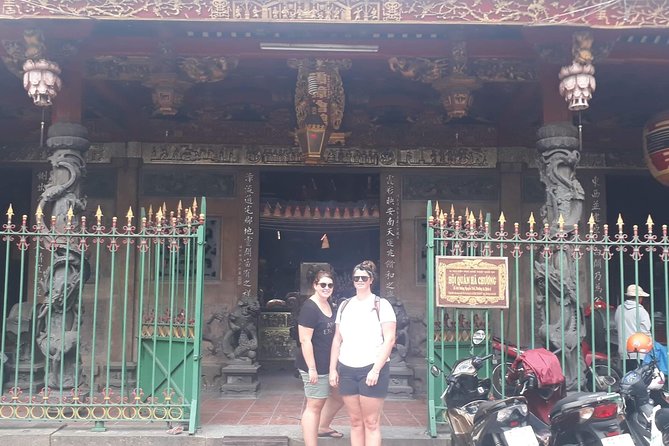
District 5 is Ho Chi Minh City’s Chinatown, and the tour uses two religious sites to introduce its Chinese heritage. Thien Hau Temple, also called the Lady of the Sea temple, was built by Chinese residents in 1760. The building materials were brought from China, adding to the sense of a community maintaining links with its homeland.
Allow about 30 minutes here. That is enough time to notice the temple’s age, examine its devotional details, and hear how Thien Hau has served people connected with travel and the sea. The visit gives you a pause from the traffic and a chance to see a religious building still tied to local community life.
The tour also includes the oldest church in this part of the route, built in 1865 by Father Phillippe, a priest of the Paris Missionaries Association of the diocese of Canton. Its presence beside Chinese heritage sites helps explain that District 5 is not defined by one culture alone. The neighborhood reflects several layers of migration, religion, and colonial-era influence.
Do not expect a long guided architectural tour at either site. The schedule covers several places in four hours, so the guide’s explanations are likely to be concise. If one building interests you, tell your driver. In a private group, you have a better chance of spending a little more time where your curiosity takes you.
Same city, a different ride:
- Saigon Evening Food Tour by Scooter
★ 5.0 · 944 reviews - Saigon Afternoon Unseen Street Food by Scooter |Opt: Ao Dai Rider
★ 5.0 · 854 reviews - Morning Saigon Unseen Adventure Scooter with Ao Dai Riders Option
★ 5.0 · 646 reviews - Saigon Afternoon City Historical Scooter Tour |Opt: Ao Dai Riders
★ 5.0 · 466 reviews
Fresh coconut at the floating market
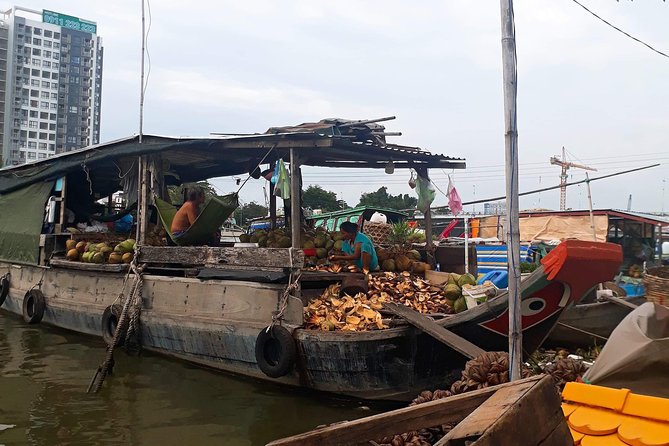
After the older neighborhoods, the route goes to a floating market area for fresh coconut juice. Boats from the Mekong Delta dock here to sell produce, and some people live on their boats throughout the year.
This stop offers a different view of city commerce. You are not visiting a rural floating market deep in the delta. You remain in Ho Chi Minh City, but you get to see the point where waterborne trade reaches the city. The coconut drink is included, and the stop gives you a chance to talk with local people who live and work on the boats.
The stop lasts about an hour according to the schedule, making it one of the longer pauses. That extra time matters. You can drink your coconut juice without rushing, look at the boats, and listen to the guide explain how products move in from the Mekong Delta.
There is a practical point here: the exact feel of a market depends on the time and activity on the water. You might find plenty of trading activity, or you might see a quieter scene. The value is in the setting and the connection to regional food supply, not in expecting a staged show.
District 4, spring roll vermicelli, and the final meal
The final neighborhood is District 4, described as Saigon’s smallest district and once associated with organized crime. Today, the area is part of the city’s wider food and residential scene. The tour uses it as the place for its included meal.
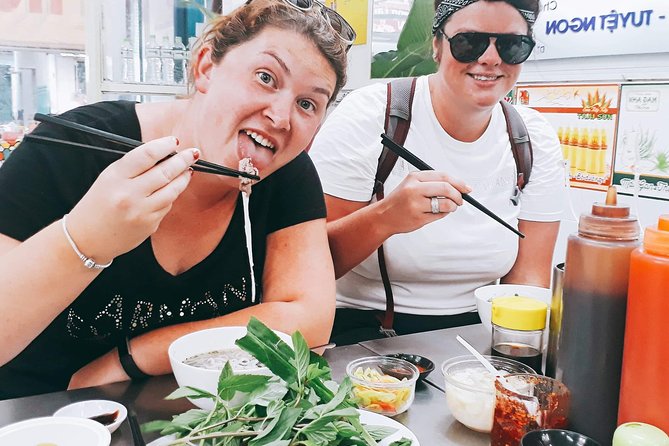
You eat spring roll vermicelli, a Vietnamese dish that combines noodles with spring rolls and accompanying ingredients. This is the only meal included, so plan on it being a satisfying stop rather than a full food crawl. The experience is built around one local meal plus two drinks: coffee and coconut juice.
That structure is worth understanding before you book. The name suggests a street food tour, but the route is really a city-and-food tour. You will taste a few things while spending more time on history, neighborhoods, and transport. If you want ten or more tastings, choose a dedicated evening food tour instead.
District 4 is a fitting ending because the tour has moved from major political events to the smaller details of how the city eats and lives. After the meal, your drivers say goodbye and the activity ends.
Is $26 a good value for four hours?
At $26 per person, this tour offers a lot of coverage for the price. You receive about four hours of transport, hotel pickup, a private English-speaking driver, an open-faced helmet, a raincoat if needed, accident insurance, one meal, and two drinks.
The strongest value comes from the route. Several stops, especially the old apartments, flower market, bunker, and floating market, would be awkward to combine on your own in one afternoon. You also avoid the cost and uncertainty of arranging separate rides between District 3, District 5, District 4, and the market area.
The tradeoff is depth. Most stops are short, and the tour does not provide a long visit at each site. You are paying for range and local transport rather than extended time inside museums or religious buildings.
The tour is also offered as a private activity, so your group does not share the ride with strangers. That helps justify the price if you value flexibility and direct conversation. A booking made well ahead is sensible, since this experience is booked an average of 31 days in advance.
Safety, comfort, and who should book
Most travelers can participate, but you should be comfortable riding as a passenger on a motorbike for much of the afternoon. The open-faced helmet offers basic protection while keeping you exposed to heat, wind, and rain. A raincoat is supplied if needed, and accident insurance is included.
Children under five must be accompanied by their parent during the tour. If a passenger weighs more than 130 kilograms, contact the operator before booking. These are important points to settle before you commit.
I would choose this tour if you are in Ho Chi Minh City for a short stay and want to understand the city beyond the central sights. It suits you particularly well if you like neighborhoods, local markets, brief historical stops, and food woven into a moving route.
I would be more cautious if you dislike motorbikes, need long seated breaks, or want a slow architectural tour. The afternoon has a lot packed into it, and the scooter is central to the experience rather than a minor detail.
Should you book the Saigon Afternoon Excursion by Scooter?
Book it if you want a private four-hour introduction to the parts of Ho Chi Minh City that are easy to miss. The mix of Thich Quang Duc’s monument, the 1968 bunker, old apartments, flower commerce, Chinese religious heritage, floating boats, and District 4 food gives you a useful sense of the city’s layers.
The best reason to choose it is not one landmark. It is the way the stops connect. You move from national history to local coffee, from a 1760 temple to a flower market, and from wartime memory to a bowl of spring roll vermicelli.
Skip it if your priority is a long food crawl or a quiet museum afternoon. For everyone else, the low price, private format, included food and drinks, and street-level route make this a practical way to get your bearings fast.
FAQ
What time does the tour begin?
The tour begins at 1:00pm.
How long does the scooter excursion last?
The experience lasts approximately four hours.
Is hotel pickup available?
Yes. Pickup is offered from your hotel or another specified place.
Is the tour private?
Yes. Only your group participates in the activity.
What food and drinks are included?
The tour includes one meal, Vietnamese coffee, and fresh coconut juice. The meal is spring roll vermicelli.
Is a helmet provided?
Yes. A high-quality open-faced helmet is included. A raincoat is also provided if needed.
Is accident insurance included?
Yes. Accident insurance is included in the tour price.
Can children join the tour?
Most travelers can participate. Children under five must be accompanied by their parent, and passengers weighing over 130 kilograms should contact the operator before booking.
Just added around Ho Chi Minh City
- The Unique Ao Dai Street Food Tour By Scooter★ 5.0 · 11 reviews
- Saigon Hidden Gems Day Tour by Scooter – Local Insider’s Ride★ 5.0 · 2 reviews
- Saigon Vegan Food Tour on Scooter★ 5.0 · 12 reviews
- Ho Chi Minh City: Local Food Tour by Scooter with Vegan Option★ 5.0 · 2 reviews
- Saigon Secrets – Half Day Tour With Vintage Vespa★ 5.0 · 7 reviews
- Saigon Night Scooter Experience And Local Food★ 5.0 · 13 reviews
- Night Food Tour in Saigon By Scooter★ 5.0 · 7 reviews
- Saigon Afternoon Unseen Street Food Adventure by motorbike or scooter★ 5.0 · 2 reviews
Ho Chi Minh City Scooter Tours, compared.
City Highlights and Saigon Unseen Scooter Combo Tour
Read our review →
Afternoon Saigon Unseen Adventure by Scooter |Opt: Ao Dai Riders
Read our review →
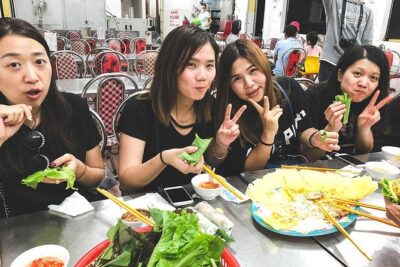
Saigon Afternoon Unseen Street Food by Scooter |Opt: Ao Dai Rider
Read our review →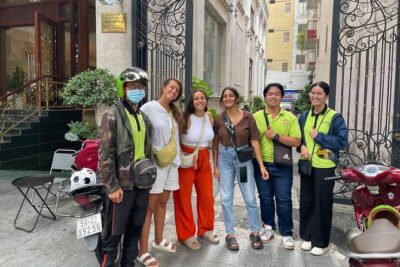
Morning Saigon Unseen Adventure Scooter with Ao Dai Riders Option
Read our review →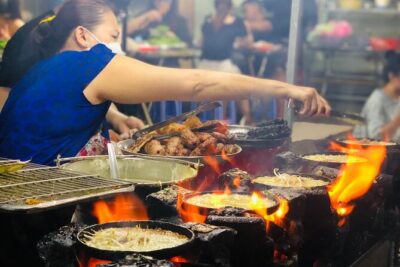
Saigon Food Tour by Scooter with Eleven Tastings
Read our review →
Saigon Morning City Historical Scooter Tour w Ao Dai Rider option
Read our review →Browse the lists this tour appears in