
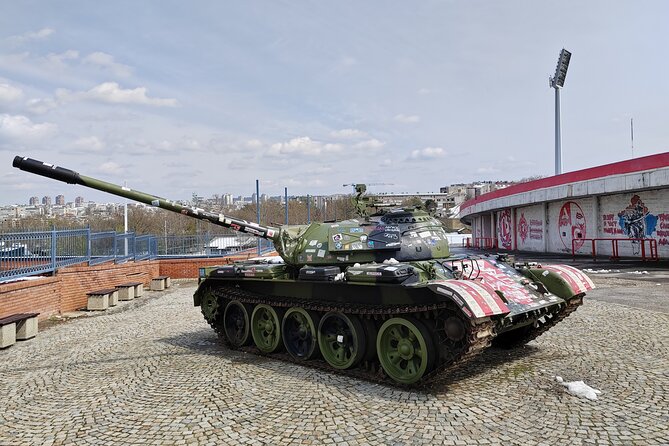
Review · BELGRADE SCOOTER TOURS
E-Scooter Belgrade Hooligans Tour
Belgrade’s football rivalry is painted across the city, and this tour gives you a quick, entertaining way to find it. You ride through Dorcol, Cubura, and Vracar, stopping for graffiti, murals, and stories tied to Partizan and Red Star supporter culture. The two stadium visits add a useful sense of place to what might otherwise be a street-art ride.
I like the chance to see both Partizan Stadium and Red Star’s Marakana in one outing, and I like that the guide does more than point at walls. Uros and Marko are named as guides for this experience, and the strongest part of their job is explaining the meaning behind the markings and answering questions. The main consideration is that this is a football-focused tour, not a general introduction to Belgrade, and three hours on city streets may not suit anyone uneasy on an e-scooter.
Key points to know before you book
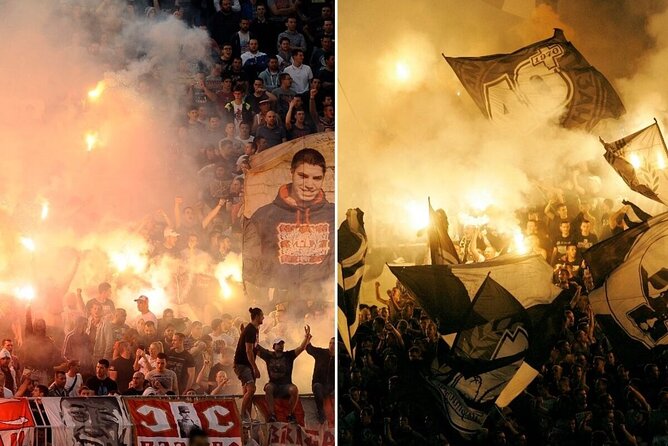
- Two rival stadiums in one afternoon: Visit Partizan Stadium and Red Star Belgrade’s Marakana, including supporter graffiti around the stands.
- Dorcol sets the scene: Explore the neighborhood’s black-and-white and red-and-white divisions through murals and street markings.
- Guides bring the stories: Uros and Marko are named guides, with a strong focus on Serbian football, basketball, graffiti, and supporter culture.
- E-scooters save time: Cover several neighborhoods without spending the whole outing on foot.
- The price is $48.06: That includes the scooter, helmet, and safety briefing, but not personal expenses.
- Plan around the weather: Poor conditions can lead to a new date or a full refund, and free cancellation is available up to 24 hours before departure.
Belgrade’s football map, read from an e-scooter
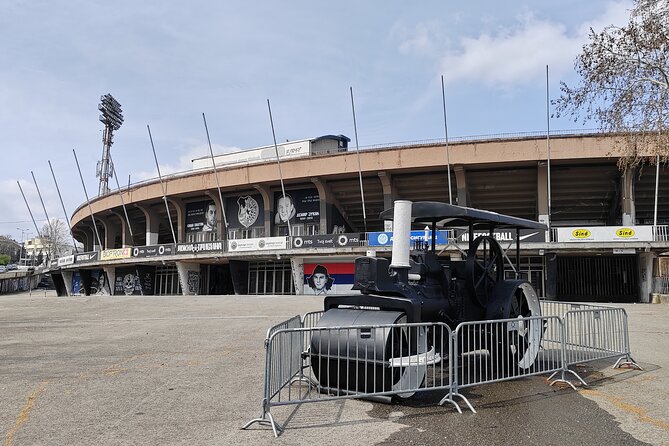
This is not a standard sightseeing circuit. You will not spend the morning ticking off the Belgrade Fortress, the Church of Saint Sava, or the city’s main museums. Instead, you follow a less formal map, one made from painted walls, club colors, neighborhood loyalties, and stories about the football culture that shapes parts of the city.
That focus is the reason to book. If you follow Serbian football, collect street-art experiences, or simply want a local subject that goes beyond the usual tourist route, this tour gives you a clear theme. The e-scooter also matters. The stops are spread across several parts of Belgrade, so riding between them lets you see more than you would on a short walking tour.
The experience lasts about three hours and begins at Maršala Birjuzova 23 in central Belgrade. It returns to the same meeting point. A helmet, e-scooter, and safety briefing are included, so you do not need to arrange your own equipment.
The group can reach a maximum of 20 people. That is not an intimate private tour, but the guide still has a chance to answer individual questions, especially if the group is smaller on your date. The outing is available daily between 11 a.m. and 6 p.m. during the listed operating period.
More Electric Scooter Tours in Belgrade:
- E-Scooter CRAFT BEER and BREWERY Tour
★ 5.0 · 37 reviews - E-Scooter Zemun Tour
★ 5.0 · 26 reviews - E-Scooter Tour of Belgrade
★ 4.0 · 17 reviews
Dorcol, where the rivalry first appears
The tour begins with about an hour in Dorcol, the longest stop of the day. This is where the supporter culture becomes easiest to read. The neighborhood is described through black-and-white and red-and-white sections, a reference to the colors associated with Belgrade’s two major football clubs.
You will see graffiti and murals that are well known in Belgrade. The value here is not just taking photographs. A painted wall can tell you which side claims a particular street, how supporters present their club, and how football identity becomes part of daily city life.
This is also the best place to ask questions. If you are unfamiliar with the difference between Partizan and Red Star supporter groups, the guide can provide the basic framework before you reach the stadiums. The tour’s named guides, Uros and Marko, are described as especially focused on explaining the background of the graffiti and the wider football and basketball scene.
Allow yourself to look closely. Large pieces may attract the eye first, but smaller tags and repeated symbols can help you understand how supporters mark territory. The tour is not presented as a formal art-history walk, so you should expect practical explanation and local stories rather than a lecture about technique or artists.
Dorcol also gives you a useful first hour on the scooter. You get time to become comfortable with the machine before the route moves on. If you have little experience riding an e-scooter, use the safety briefing seriously and tell the guide if you need a slower start.
Partizan Stadium and the black-and-white side
The visit to Partizan Stadium lasts about 30 minutes. You will explore graffiti around the stadium stands and hear about the Partizan side of the rivalry.
For football fans, this is one of the tour’s main reasons to go. Seeing a club’s home ground after looking at its symbols around Dorcol connects the street markings with a physical place. You are not just seeing a stadium from a passing vehicle. The stop is built around the supporter graffiti and the stories attached to it.
The experience also has a basketball angle. Partizan is not only a football club, and the guide Uros is described as particularly passionate about Partizan football and basketball. If you follow European basketball as well as football, ask about that connection during the stop.
The 30-minute timing is enough for an introduction and a close look at the graffiti, but it is not a stadium tour in the conventional sense. Do not book this expecting a match-day atmosphere, access to every interior space, or a long architectural visit. The emphasis is on the surrounding supporter culture and the visual markings on and around the stands.
That distinction helps set a fair expectation. You are paying for a guided cultural route that includes the stadiums, not for a ticket to a game or a full behind-the-scenes stadium experience.
Red Star’s Marakana and the rival half of Belgrade
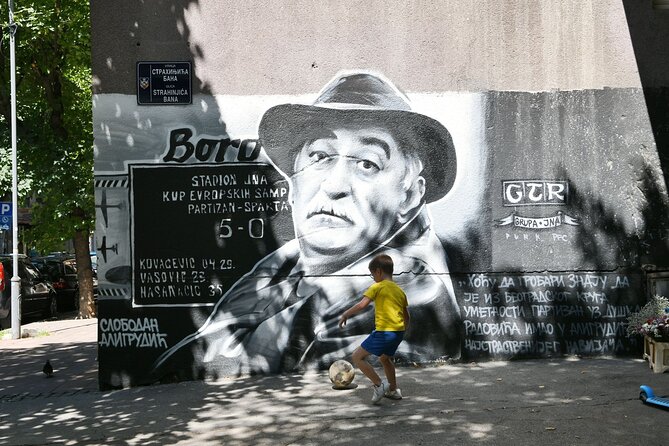
The next stadium stop is Red Star Belgrade’s Marakana, also planned for about 30 minutes. Here, the guide turns to the red-and-white side of the city and shows graffiti around the stadium stands.
Putting the two stadiums into the same three-hour route is a practical strength. On your own, you could visit both locations, but you might miss the connection between their street art, supporter groups, and neighborhoods. The guide gives the rivalry a structure, moving from visual clues in the city to the grounds where those loyalties are centered.
The contrast between the Partizan and Red Star stops is part of the appeal. You can compare the colors, markings, and atmosphere without needing to arrange separate transport. The tour does not ask you to choose one club. It presents both sides, although the personal interest of a guide may lean toward one team. Uros, for example, is identified with a strong Partizan passion, while Marko is described as an expert guide on football and graffiti.
If you are a neutral visitor, that is not a problem. In fact, it can make the stories more lively. Just remember that the subject is supporter culture, including the edge and intensity implied by the word hooligans in the tour title. Anyone uncomfortable with football rivalry or confrontational fan culture should choose a different Belgrade activity.
A few more scooter tours around Belgrade worth a look
- Belgrade Hooligans E Scooter tour
★ 5.0 · 16 reviews - E-Scooter Communist Yugoslavia Tour
★ 5.0 · 15 reviews - E Scooter Craft Beer and Breweries tour
★ 5.0 · 12 reviews - E-Scooter Street Art Tour
★ 4.5 · 6 reviews
Cubura, a neighborhood shaped by supporter graffiti
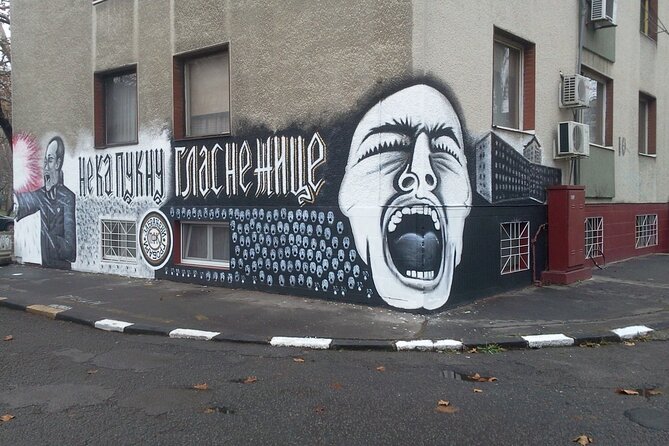
The 30-minute stop in Cubura shifts the focus away from the stadiums and back into an everyday neighborhood. You will see Red Star-related graffiti and markings connected with local supporter identity.
This stop matters because football culture does not end at the stadium gates. In Cubura, the art and slogans are part of the streets where people live, work, and move around. The guide can help you read those signs rather than treating them as random decoration.
You may find this the most useful section if you care about how a city expresses local identity. The murals are a visual record of loyalties, but the guide’s explanation gives them context. The experience is less about polished public art and more about the informal marks that make one block feel different from another.
The route also benefits from the scooter here. You can cover the gap between the stadiums and neighborhood stops without losing much of the afternoon to walking. Still, keep your attention on the road. Graffiti is easy to miss when you are riding, so the guide’s decision to stop and explain is important.
Vracar and Njegoseva Street
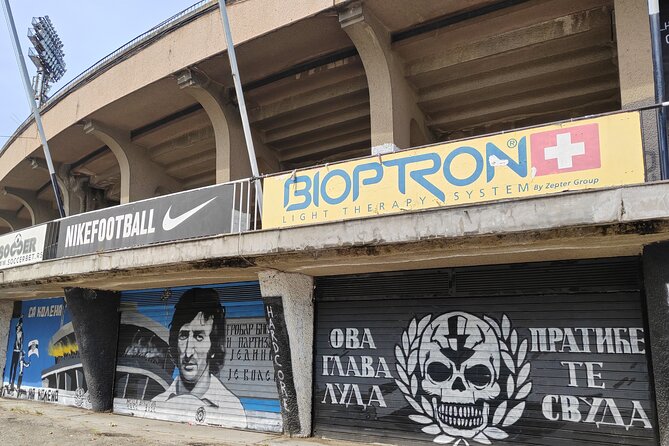
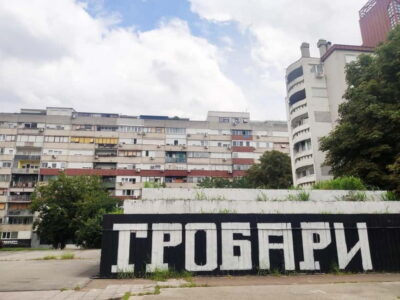
The final listed stop is Vracar, with about 30 minutes on Njegoseva Street. Here, you will see Grobari graffiti. Grobari is the name associated with Partizan supporters, so this stop brings the route back to the black-and-white side after the Red Star emphasis in Cubura.
The movement between neighborhoods gives you a more balanced picture than a tour based on one stadium alone. You see how supporter markings appear in different parts of the city and how the rivalry is expressed beyond match venues.
Njegoseva Street also helps keep the experience grounded in ordinary Belgrade. You are not being shown a sealed-off attraction. You are moving through real streets, stopping to understand what is painted there, then continuing by scooter. That makes the tour feel more like a guided city ride than a museum visit.
As with Cubura, the graffiti may be more meaningful to you if the guide explains its background. The tour is at its best when you ask questions. Marko is specifically described as taking time to answer individual questions, and that is useful here, where a symbol or phrase may not mean much without local context.
What $48.06 buys you
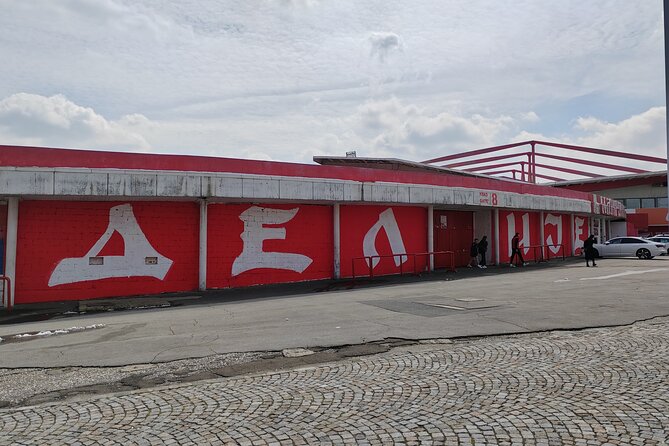
At $48.06 per person, this is not the cheapest way to look around Belgrade, but the price is reasonable if you want a focused, guided experience rather than a basic scooter rental. You receive the e-scooter, helmet, and safety briefing, plus roughly three hours of guiding and transport between five areas or stops.
The value depends on your interests. A football fan gets two stadium visits, supporter graffiti, and explanations of the local scene. Someone interested in street art gets a route through Dorcol, Cubura, and Vracar with a clear theme. A first-time visitor looking for major landmarks may find the price less convincing because the tour does not center on Belgrade’s classic monuments.
You are also paying for interpretation. The graffiti is free to see, and admission tickets are not needed at the listed stops. The guide’s role is to identify what matters, explain the club divisions, and connect the neighborhoods with the stadiums. Without that context, you would see painted walls but miss much of the point.
The maximum group size of 20 keeps the published price accessible, though a large group may make conversation harder. If personal questions and back-and-forth discussion matter to you, try to stay near the guide during stops.
Scooter comfort, timing, and practical planning
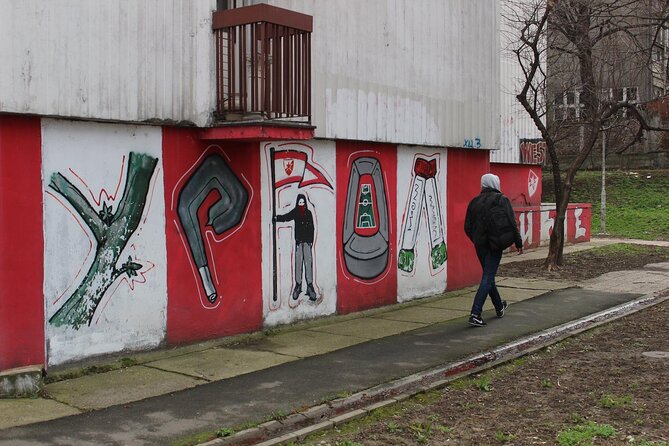
The meeting point is Maršala Birjuzova 23, Beograd 11000, Serbia. The activity ends back there, which makes planning your next stop easier. The location is near public transportation, and confirmation is provided when you book.
The tour is listed for Monday through Sunday, with operating hours from 11 a.m. to 6 p.m. The exact start time you choose matters because the experience is outdoors and requires good weather. If poor weather cancels the outing, you will be offered another date or a full refund.
You should wear clothes that let you move comfortably and keep your attention on the ride. The provided helmet is a useful safety inclusion. A safety briefing comes before departure, and most people can participate, but you should be honest with yourself about your comfort on an e-scooter.
The tour is booked an average of 11 days ahead, which suggests you should not leave it until the last moment if it is central to your plans. Free cancellation is available up to 24 hours before the start time. A cancellation made less than 24 hours ahead is not refunded, and changes inside that period are not accepted.
Personal expenses are not included. The supplied details do not specify food, drinks, or extra purchases, so budget separately for anything you may want during the day.
Who will get the most from this ride
I would choose this tour if you are a football supporter, a street-art fan, or someone who likes seeing a city through one strong local subject. It also suits visitors who want to cover several neighborhoods without committing to a full-day excursion.
You do not need to know every Serbian club or supporter group before you arrive. The guide’s job is to explain the black-and-white and red-and-white divisions, show you the markings, and connect the streets with Partizan and Red Star. Your questions will make the experience better.
I would be more cautious if you want a broad Belgrade overview. This is not the right substitute for a general city tour. It also may not suit you if you dislike scooters, prefer indoor attractions, or want a quiet art walk without discussion of football rivalry and hooligan culture.
The named guides add a personal element. Uros is associated with strong Partizan football and basketball knowledge, while Marko is described as giving detailed explanations of football, graffiti, and the city. Since guide assignments can vary, you should confirm who will lead your departure if that matters to you.
Should you book the E-Scooter Belgrade Hooligans Tour?
Book it if you want the unusual side of Belgrade: club colors on neighborhood walls, two rival stadiums, and the stories that turn graffiti into a local map. The tour is especially good value for football fans because it combines transport, equipment, and a guide who can explain both the visual and cultural details.
Skip it if your priority is Belgrade’s major sights, museum interiors, or a calm walking tour. At $48.06, the price makes sense for a specialized three-hour experience, not as a general city introduction. For the right audience, the combination of e-scooter riding, stadium visits, and direct local explanation makes this a memorable way to understand a passionate part of the city.
FAQ
How long does the E-Scooter Belgrade Hooligans Tour last?
The tour lasts approximately three hours. The listed stops include one hour in Dorcol and about 30 minutes each at Partizan Stadium, Red Star’s Marakana, Cubura, and Vracar.
What is included in the tour price?
The price includes an e-scooter, a helmet, and a safety briefing. Personal expenses are not included.
Where does the tour begin and end?
The meeting point is Maršala Birjuzova 23, Beograd 11000, Serbia. The activity ends back at the same meeting point.
Which stadiums does the tour visit?
The route visits Partizan Stadium and Red Star Belgrade Stadium, also known as Marakana. You will see supporter graffiti around the stadium stands.
How many people can join the tour?
The maximum group size is 20 people. Most people can participate, and the meeting point is near public transportation.
Can I cancel the tour for a full refund?
Yes. You can cancel up to 24 hours before the experience start time for a full refund. If poor weather causes cancellation, you will be offered another date or a full refund.
Just added around Belgrade
- E-Scooter Street Art Tour★ 4.5 · 6 reviews
- E-Scooter Communist Yugoslavia Tour★ 5.0 · 15 reviews
- E-Scooter Serbian Food Tour★ 5.0 · 3 reviews
- Belgrade Layover Private tour + E-Scooter Sighteeing★ 5.0 · 6 reviews
- Street Art E Scooter tour★ 5.0 · 3 reviews
- E-Scooter Serbian Food Tour★ 5.0 · 2 reviews
- E Scooter Craft Beer and Breweries tour★ 5.0 · 12 reviews
- E Scooter Communist tour New Belgrade★ 4.6 · 4 reviews
Belgrade Scooter Tours, compared.


Belgrade Layover Private tour + E-Scooter Sighteeing
Read our review →
Browse the lists this tour appears in