Review · ELECTRIC SCOOTER TOURS
Electric Scooter Tour: North Buenos Aires
Northern Buenos Aires is made for covering ground, and this 10-kilometer electric scooter ride links grand squares, political landmarks, Recoleta, and Palermo-area sights without turning your day into a march. Your guide, including guides such as Miguel or Rita, adds stories about football, barbecue, politics, religion, and the Argentine way of speaking.
I like two things here: the small maximum of eight people, which keeps the ride personal, and the mate stop at Floralis Genérica, where you learn how to prepare Argentina’s signature drink while trying an alfajor. The main caution is timing. The advertised length is about two and a half hours, but traffic, weekend activity, and the route through Recoleta can make the outing last longer.
Key points to know before you book
- A fast look at northern Buenos Aires: Cover major sights over roughly 10 kilometers instead of seeing them one block at a time.
- Mate and alfajor included: Stop by Floralis Genérica for a yerba mate tasting and a chocolate alfajor filled with dulce de leche.
- Guides bring local subjects to life: Expect talk about football, Argentine politics, social habits, French influence, religion, and barbecue.
- Small-group format: The tour accepts a maximum of eight people, a useful size for questions and street riding.
- Basic riding ability matters: You should know how to ride a bicycle, since the scooter route uses city streets and paths.
- Weather can affect departure: Poor weather may lead to a new date or a full refund.
Why an electric scooter works well in Buenos Aires
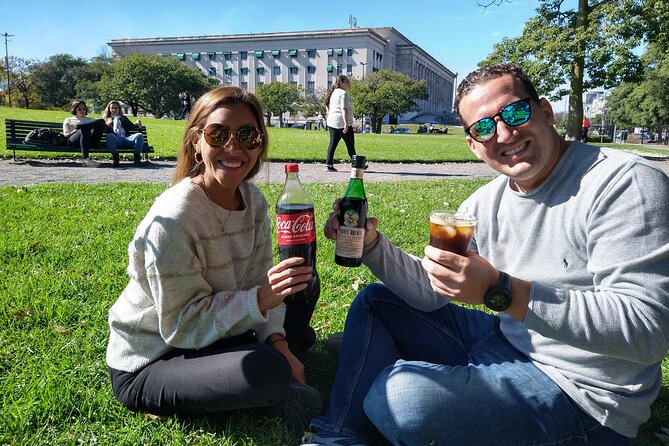
Buenos Aires is broad, grand, and not always kind to tired feet. The city’s famous sights are spread across several neighborhoods, so an electric scooter gives you a practical way to connect them in one afternoon. You can move from the leafy area around Plaza General San Martín to Recoleta and then toward the Obelisk without spending much of the tour waiting for taxis or public transport.
The ride covers about 10 kilometers. That is enough distance to give you a useful first look at the city, but not so much that the outing becomes an endurance test for most people who are comfortable on two wheels. You will still need to pay attention to the route, traffic, pedestrians, and changing surfaces.
The tone is not simply sightseeing by scooter. The guide uses the ride to explain how Buenos Aires sees itself. You hear why the city often feels European, why football matters so much, how Argentines relate to authority, and why the country has a reputation for expressive, sometimes self-confident conversation.
That local framing is the main reason to choose this over a self-guided ride. A scooter can get you from one monument to the next, but a guide can connect the monuments to Argentine habits and arguments. Miguel has been praised for discussing politics, the economy, the university system, and Argentina’s relationship with the United States. Rita is also described as warm, funny, and full of stories.
More Electric Scooter Tours in the world:
- Budapest Small-Group Guided Tour on MonsteRoller e-Scooter
★ 5.0 · 1,517 reviews - Budapest: Small-Group MonsteRoller E-Scooter Tours
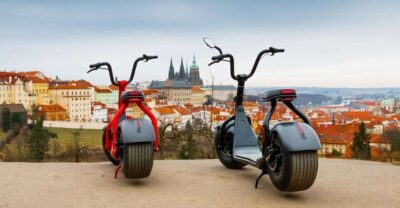
★ 4.9 · 1,198 reviews - Prague: Fat Tire E-Scooter Guided Tour
★ 5.0 · 802 reviews
Starting at Plaza General San Martín
The meeting point is at Tres Sargentos 463, in central Buenos Aires. The tour begins at 2:00 pm and finishes back at the same place, which makes planning your next activity easier if the ride stays close to its expected length.
Plaza General San Martín opens the conversation with a useful question: why does Buenos Aires feel so European? The square gives your guide a good setting for explaining the city’s architecture, public spaces, and cultural ties to Europe, especially France.
You get about 20 minutes here. That is enough for an introduction and some photographs, but not a long architectural study. The value is in getting the city’s visual character explained before you begin moving through it.
Torre Monumental and the city’s immigrant roots
The next stop is Torre Monumental, where you spend about 15 minutes. The tower is tied to Buenos Aires’s British connections, and the guide uses it to talk about migration, football, and the city’s international character.
The football discussion matters because it gives you a window into daily life rather than just a date or architectural fact. Football is treated here as a social force, part of how people identify with neighborhoods and with Argentina itself.
The stop is also a reminder that Buenos Aires was shaped by people arriving from many places. The city’s food, language, clubs, buildings, and rivalries all carry traces of those arrivals. You will get more from this section if you enjoy connecting a monument to the people who built the city around it.
The Obelisk, the city’s great meeting point
The stop at the Obelisk is brief, about 10 minutes, but it gives the route one of its most recognizable images. Your guide presents it as a major witness to Buenos Aires, a monument that has seen celebrations, protests, football victories, and public gatherings.
Do not expect a long visit inside a museum or a formal monument tour. This is a street-level stop for orientation and photographs. Its strength is the scale of the surrounding city and the chance to hear how Argentines use central public places.
The Obelisk also helps you understand the tour’s basic approach. You are not stopping at every sight for an extended lecture. Instead, you get a series of focused explanations while moving through the city.
A few more scooter tours around the world worth a look
- Florence Vespa Tour: Tuscan Hills and Italian Cuisine
★ 5.0 · 4,019 reviews - Scooter Tours of Red Rock Canyon
★ 5.0 · 2,174 reviews - Vespa Sidecar Tour By Night with Pickup
★ 5.0 · 1,803 reviews - Rome Morning Vespa Sidecar Tour in Rome with Cappuccino
★ 5.0 · 1,771 reviews
French influence and Argentine self-image
At the French Embassy, the guide turns from architecture toward national character. The topic is why Argentines have a reputation for being conceited, or at least unusually sure of themselves.
This is not a dry stop. It gives the guide room to explain the influence of France on Buenos Aires and the way Argentines talk about their own culture. Expect a conversational treatment rather than a formal academic lecture.
That kind of discussion can be one of the better parts of the outing, especially if you want more than a list of dates. The guide may connect the city’s French associations with manners, architecture, language, social class, and the habit of expressing an opinion with confidence.
You spend roughly 10 minutes here. The short stop keeps the ride moving, but it also means the depth depends on your guide and on how many questions the group asks.
Facultad de Derecho and Argentina’s public life
The Faculty of Law at the University of Buenos Aires is given about 15 minutes. The building represents more than education. It is presented as a place connected to Argentina’s social and political leaders and to the country’s public life.
The tour describes the faculty as the country’s alma mater and links its inauguration with Domingo and Evita Perón. The stop is useful because it moves your attention away from monuments and toward institutions.
You learn how a university can shape national leadership, political debate, and social ideas. This is also where a guide such as Miguel may expand on the university system and current political conditions. If you are interested in how Argentina works today, this can be one of the most useful conversations of the ride.
Mate time beside Floralis Genérica
Floralis Genérica is the planned break, lasting about 20 minutes. Here you learn how to prepare mate, Argentina’s traditional yerba-based infusion, and sample it with a chocolate alfajor filled with dulce de leche.
This is a small stop with real value. Mate is not simply a hot drink. The preparation and sharing of it are part of Argentine social life, and learning the ritual gives you something practical to take away from the tour.
The alfajor adds a welcome sweet bite, especially during a ride where you may be exposed to wind and sun. The included snack is modest, but it fits the experience. You are not stopping for a full meal, and you should not treat it as one.
Floralis Genérica also makes sense as a rest point. You can pause from riding, take photographs, and listen without trying to balance your attention between the guide and the street. If mate is completely new to you, ask questions. The point is not just to taste it, but to understand how it fits into ordinary Argentine life.
Recoleta Cemetery and the figures of Argentina
The tour then reaches La Recoleta Cemetery for around 15 minutes. You can go inside for about 10 minutes and take photographs. This is one of the route’s most atmospheric stops, with ornate tombs and a strong connection to Argentine and continental history.
Several national heroes and important figures are buried here. The cemetery gives the guide a natural chance to explain religion, politics, social status, and the people who shaped the country.
The short visit is the main limitation. Recoleta Cemetery rewards a slow walk, and 10 minutes inside will only give you a quick look. If the cemetery is a high priority for you, return on your own later with more time.
There is also a practical timing issue. On weekends, the route may pass through a crafts market on the way to the cemetery. That can slow the ride and may require careful movement through a crowded area. One family’s outing ran much longer than planned for this reason, so do not schedule an important appointment immediately afterward.
Basilica del Pilar and the role of religion
The Basilica of Our Lady of the Pillar receives about 10 minutes. The stop introduces the role of Catholicism in Argentina and connects it to the country’s identity as the home of a pope from the end of the world, as the description puts it.
You should expect an exterior-focused visit unless your guide tells you otherwise. The stop is short, but it adds balance to the route. You see political buildings, public monuments, a cemetery, and a church, which gives you several ways to think about Buenos Aires.
Religion remains an important part of Argentina’s cultural story, even for people who are not practicing Catholics. This stop helps explain why churches and religious figures appear so often in the country’s public identity.
MALBA and the limits of the final stop
The last listed stop is the Museum of Latin American Art of Buenos Aires, usually called MALBA. The visit is planned for about 15 minutes, and museum admission is not included.
That timing suggests a quick exterior look or a short introduction rather than a proper museum visit. If you want to explore the collection, plan a separate visit and pay the entrance fee yourself. Fifteen minutes is not enough for a serious art museum stop.
Still, including MALBA broadens the route. The day is not only about old buildings, national heroes, and political symbols. It also points toward modern Latin American culture and art.
What the $39 price really covers
At $39 per person, this is a moderate-priced way to combine transportation, guiding, equipment, and a cultural tasting. You receive use of the electric scooter, a helmet, a reflective belt, the mate infusion, and the alfajor.
The strongest value comes from the amount of ground covered. If you tried to connect all these places on foot, you would spend much of the afternoon walking between them. Public transportation could cost less, but it would not give you a guide riding with you and explaining the city as you go.
The price is less attractive if you want long visits at each sight. This is a moving city tour, not a series of full museum and monument admissions. MALBA is not included, and the cemetery visit is short.
For me, the cost makes sense for a first afternoon in Buenos Aires, especially if you want orientation and local conversation. It is also useful for families who want to see major sights without exhausting everyone. One family described reaching the main sights without becoming tired, while another found the outing too long because it extended far beyond the expected schedule.
Riding ability, weather, and group size
You should already know how to ride a bicycle. The operator says the tour is not recommended for people without that basic skill. You do not need to be an athletic cyclist, but you should feel comfortable balancing, steering, stopping, and riding in a city setting.
Protective equipment includes a helmet and reflective belt. The maximum group size is eight, which is small enough for the guide to keep the group together and answer questions. It also makes the experience less impersonal than a large bus tour.
The tour requires good weather. If rain or other poor conditions force cancellation, you are offered another date or a full refund. You can also cancel for a full refund if you do so at least 24 hours before the 2:00 pm start. Last-minute cancellations and changes are not accepted, and the tour needs a minimum of two participants to operate.
The advertised duration is about two hours and 30 minutes. In practice, you should leave a buffer after the tour. Weekend crowds, the crafts market near Recoleta, traffic, and group pace can extend the ride. That is not automatically a flaw, but it matters if you have dinner reservations, a show, or another timed activity.
Who will enjoy this ride most
I would choose this tour if you want a broad first look at Buenos Aires and enjoy learning through conversation. It suits couples, families, and small groups who are comfortable on two wheels and want to connect famous places with Argentine culture.
It is especially good for you if football, politics, food customs, religion, and local attitudes interest you as much as architecture. The strongest guides appear to bring humor and personality to those subjects, with Miguel and Rita receiving particular praise for their friendly approach and storytelling.
I would be more cautious if you prefer a tightly timed itinerary. The route can run long, and several stops are brief. You should also choose something else if you cannot ride a bicycle confidently or if a full museum visit is your main goal.
Should you book the North Buenos Aires scooter tour?
Book it if you want to see a lot of Buenos Aires in one relaxed outing, with a small group and a guide who discusses the city as a living place. The mate lesson, alfajor, football talk, and political context give it more personality than a simple monument circuit.
Skip it if you need exact timing, dislike riding in city traffic, or want to spend serious time inside Recoleta Cemetery and MALBA. For everyone else, the $39 fee is fair for the coverage, equipment, and local perspective. Just keep your afternoon open, arrive ready to ride, and allow extra time after the scheduled finish.
FAQ
Where does the electric scooter tour begin?
It begins at Tres Sargentos 463, C1054ABC, in Buenos Aires.
What time does the tour start?
The scheduled start time is 2:00 pm.
Where does the tour finish?
The activity ends back at the meeting point.
How long is the tour?
The planned duration is approximately two hours and 30 minutes, though the outing can take longer because of traffic, weekend activity, or the pace of the route.
How far does the ride cover?
The tour covers about 10 kilometers through northern Buenos Aires.
What equipment is provided?
You receive use of the scooter, a helmet, and a reflective belt.
Is food or drink included?
Yes. The experience includes a yerba mate infusion and a chocolate alfajor filled with dulce de leche.
Do I need to know how to ride a bicycle?
Yes. The tour is not recommended for people who do not know how to ride a bicycle.
What happens if the weather is poor or the minimum group size is not reached?
You will be offered another date or experience, or a full refund. The tour requires good weather and a minimum of two participants.
Just added around the world
- Visit Hossegor on an all-terrain electric scooter – with a guide★ 4.7 · 4 reviews
- Electric Scooter Tour: Full Tour (Old Town + Ostrów Tumski)★ 5.0 · 3 reviews
- Vespa Tour with Professional Photographer★ 4.9 · 9 reviews
- Food tour & Vespa tour & Photo tour! All included★ 5.0 · 2 reviews
- Vespa Tour – Explore Ancient Rome★ 5.0 · 5 reviews
- Rome: Vespa Tour with Gelato and Photos★ 4.9 · 7 reviews
- Vespa Scooter Tour “Rome as a Local”★ 5.0 · 12 reviews
- Vespa Sidecar Tour: Highlights of Rome★ 4.7 · 10 reviews
Electric Scooter Tours, compared.
Budapest Small-Group Guided Tour on MonsteRoller e-Scooter
Read our review →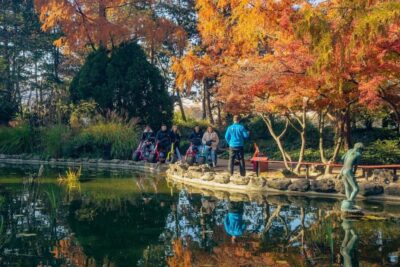
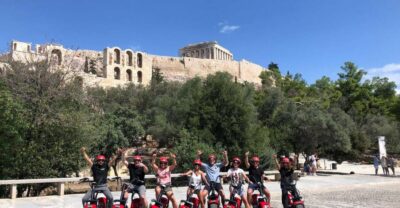
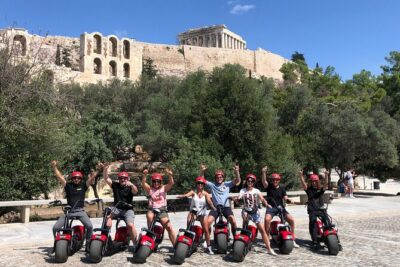
Athens Acropolis Official E-Scooter Guided Tour Fat E-Bike
Read our review →