
Review · ATHENS SCOOTER TOURS
Ancient Athens Electric ATV Scooter Tour
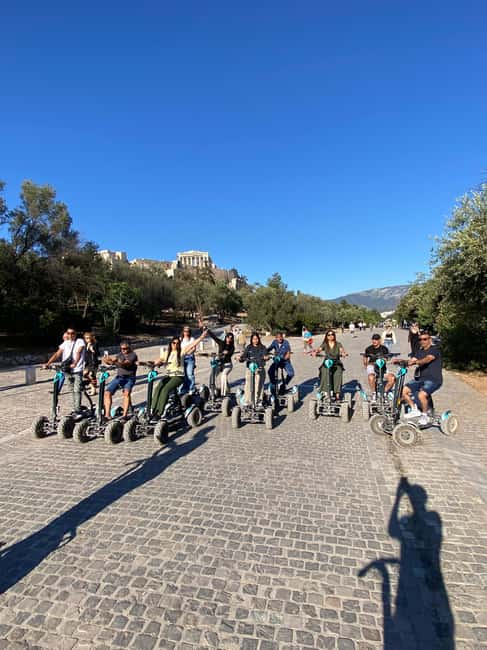
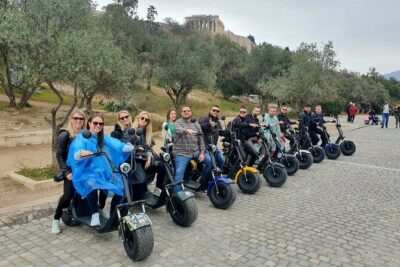
Athens is much easier to understand when you can connect its major ruins by road rather than see them as separate sights. This two-hour electric ATV tour links the Acropolis, ancient theaters, Areopagus, Pnyx, Keramikos, Ancient Agora, and Roman monuments in one compact outing.
I like the easy range of the route and the small groups of up to 10. You also get training, a helmet, insurance, water, and WiFi, so the $58 price covers more than just the ride. The main thing to consider is that the tour depends partly on your guide: Bill and Demi receive especially warm praise, while one rider found the commentary dull.
Key points at a glance

- A four-wheel electric ride: The MIA ATV scooter offers a different way to cover central Athens without walking every block.
- A strong ancient Athens route: You pass the Acropolis, Odeon of Herodes Atticus, Areopagus, Pnyx, Keramikos, Ancient Agora, Library of Hadrian, and Roman Agora.
- Views from two historic hills: Areopagus and Pnyx give you useful views over Athens and a sense of how the old city was laid out.
- A practical short tour: Two hours is enough for a broad introduction, but not enough for long visits inside every archaeological site.
- Guides in three languages: Tours are offered in English, Spanish, and Hebrew.
- Good support for first-time riders: Training, helmets, insurance, water, and WiFi are included.
Why this is a smart way to see ancient Athens
Athens can be tiring on foot. The key sights are close together on a map, but the streets rise, the pavements can be uneven, and the heat can make a short walk feel longer than expected. An electric four-wheel scooter lets you cover more ground while saving your legs for the sites you plan to visit properly.
The route also gives you a useful sense of connection. You are not simply looking at the Acropolis, then jumping to the Agora by taxi. You move through Plaka, Thissio, Monastiraki, and the streets around the archaeological zone. That helps you see how modern Athens grew around the ancient city.
The vehicles are electric, so the ride should feel quieter and lighter than a petrol-powered tour. The four-wheel design is also different from a two-wheel scooter, though you still need to listen closely during the training and follow your guide through city traffic.
This is not a replacement for visiting the Acropolis or Ancient Agora on foot. It is a way to get an overview, learn the shape of the city, and decide where you want to spend more time afterward.
More Quad Bike Rides in Athens:
- Best of Athens Electric ATV Scooter Tour
★ 4.3 · 5 reviews - Modern Athens Electric ATV Scooter Tour
★ 5.0 · 4 reviews - Athens by Night Electric ATV Scooter Tour
★ 5.0 · 2 reviews
Starting in Plaka, Athens’ oldest quarter
The tour begins in Plaka, a central neighborhood known for its traditional Greek atmosphere and narrow streets. It is a fitting starting point because you are immediately close to the Acropolis and several major archaeological areas.
You receive a short training session before setting off. That matters, especially if you have never used this type of four-wheel electric scooter. A helmet, insurance, and water are included, and the small group size should make it easier to hear instructions and stay with the guide.
Plaka is attractive, but it is also busy and compact. You should expect the first part of the ride to feel more like careful city navigation than open-road cruising. The reward comes quickly: you begin to understand how the old neighborhood sits beneath the Acropolis.
The tour is offered in English, Spanish, and Hebrew. The available guide may shape the feel of the outing, so it is worth choosing your language carefully when booking. Bill is praised for being patient and helpful, while Demi is described as clear and pleasant. One rider found the guide’s delivery boring, a useful reminder that the quality of live commentary can vary.
Alongside the Acropolis and the Odeon of Herodes Atticus
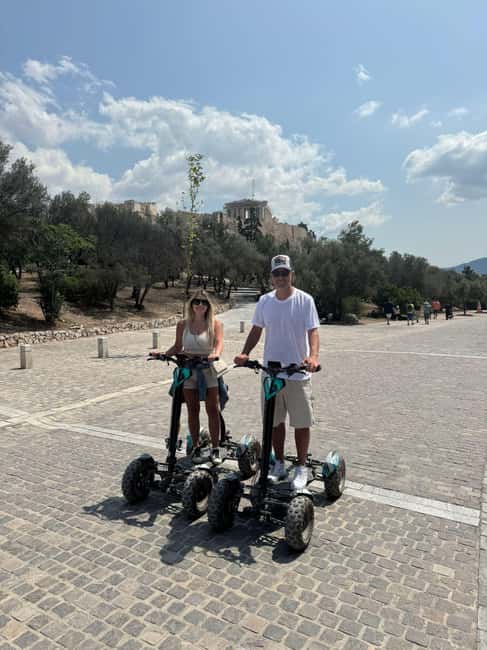
The first major views are of the Acropolis, Athens’ most recognizable monument. You do not get a long archaeological visit here, but riding alongside it gives you several chances to stop, look up, and take photographs.
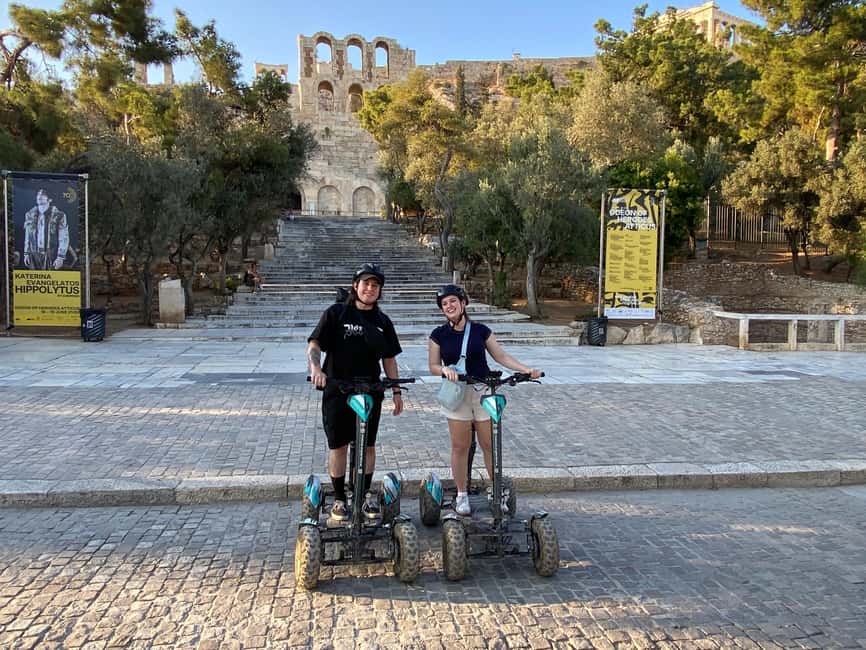
The Odeon of Herodes Atticus is one of the best early stops. This stone theater was built for performances and remains one of the most striking structures on the southern slope of the Acropolis. From the outside, you can appreciate its curved seating area and tall stone backdrop without committing the time required for a full Acropolis visit.
For me, this is one of the tour’s strongest sections because the guide can connect the monument to the surrounding streets. The Acropolis is not just an isolated rock with a temple on top. Its slopes, theaters, courts, and public spaces formed part of a much larger civic center.
Keep your expectations sensible. The tour focuses on views, explanations, and short stops. If you want to examine inscriptions, enter every monument, or spend an hour taking in the Parthenon, you need a separate visit.
The Areopagus and Athens from above
The route then climbs toward the Hill of Mars, also called the Areopagus. In ancient Athens, this rocky hill was linked to judicial proceedings. Its importance was political and legal, not simply scenic.
The view is valuable because it helps you read the city. From this point, you can look toward the Acropolis and across the central districts, seeing how the old civic center relates to the modern streets below. It is a good place for photographs, but it also gives the history some physical meaning.
The surface and slope may require extra care. The provided details do not describe the exact riding conditions at every stop, so listen to your guide and take your time. You are not required to turn the visit into a climbing contest.
This stop is especially useful early in your stay. If Athens feels confusing at street level, the view from Areopagus helps you get your bearings. You can see why the Acropolis was such a strong focal point and how close the principal ancient sites are to one another.
A few more scooter tours around Athens worth a look
- Athens: Award-Winning Acropolis Guided e-Scooter Tour
★ 5.0 · 637 reviews - Athens Acropolis Official E-Scooter Guided Tour Fat E-Bike
★ 5.0 · 504 reviews - Athens: City Highlights Guided E-Scooter Tour
★ 5.0 · 277 reviews - Athens: Premium Guided E-Scooter Tour in Acropolis Area
★ 4.9 · 264 reviews
The Pnyx, where citizens gathered
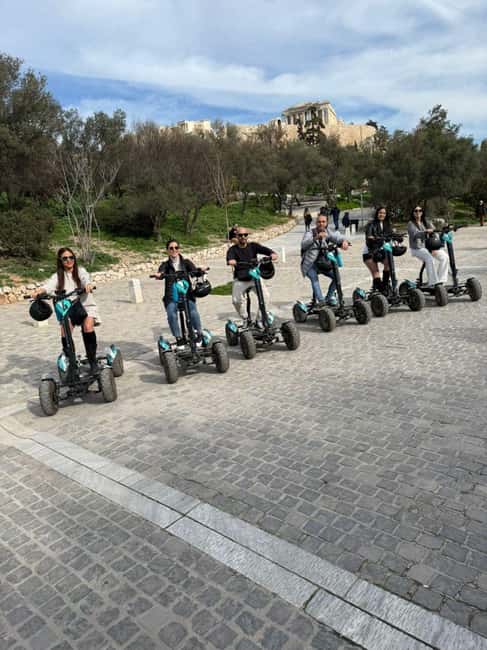
The next hill is the Pnyx, the place associated with the early democratic assembly of Athens. This is one of the most meaningful stops on the route because the setting connects directly to the idea of citizens gathering to debate and make political decisions.
The Pnyx does not have the visual drama of the Acropolis. Its value comes from the story and the setting. You can stand in the area where ordinary male citizens of ancient Athens assembled, then look across toward the Acropolis and the wider city.
A guide adds real value here. Without context, the Pnyx can look like another open archaeological area. With an explanation of its civic purpose, it becomes a place where political life took physical form.
You will probably have time for a short explanation and photographs rather than a long, quiet visit. That is typical of a broad city tour. If the birth of democracy is a major interest, make a note to return to the Pnyx independently.
Thissio and the Keramikos archaeological site

The ride continues through Thissio, one of the most pleasant central areas near the ancient sites. The neighborhood helps bridge the gap between archaeological Athens and the city you see today.
Near Keramikos, you encounter one of the less obvious parts of ancient Athens. Keramikos was both a cemetery and a pottery-production area. That combination reveals something important: ancient cities were working places, not just collections of temples and grand public buildings.
The site can help you picture the edge of the old city, where craft, burial, and movement came together. You may not enter for a full inspection during this tour, but seeing it as part of the route gives you a broader idea of daily life in classical Athens.
This is another point where the ride saves time. You can reach several areas that might feel scattered if you were walking without a plan. The tradeoff is that your stop is brief, so treat it as an introduction rather than a full archaeological visit.
The Ancient Agora and the heart of public life
The Ancient Agora is perhaps the most important stop after the Acropolis. It was the center of public life, with space for politics, commerce, discussion, and social contact. Philosophers, politicians, merchants, and citizens all moved through this area.
The Agora is where the tour’s central theme comes together. You have already seen the place of assembly at the Pnyx and the judicial importance of Areopagus. Now you reach the public center where everyday civic life happened.
A guide can help you picture the Agora as a functioning district rather than a field of ruins. Look for the relationship between open public areas, surviving structures, and the hills around the city. The surrounding topography explains why this was such a natural center.
Do not confuse passing the Agora with visiting the full archaeological park. The tour gives you an overview and commentary. If you want to walk among the ruins, see the reconstructed Stoa of Attalos, and take your time, buy a separate entry ticket and return later.
Monastiraki, the flea market, and Roman Athens
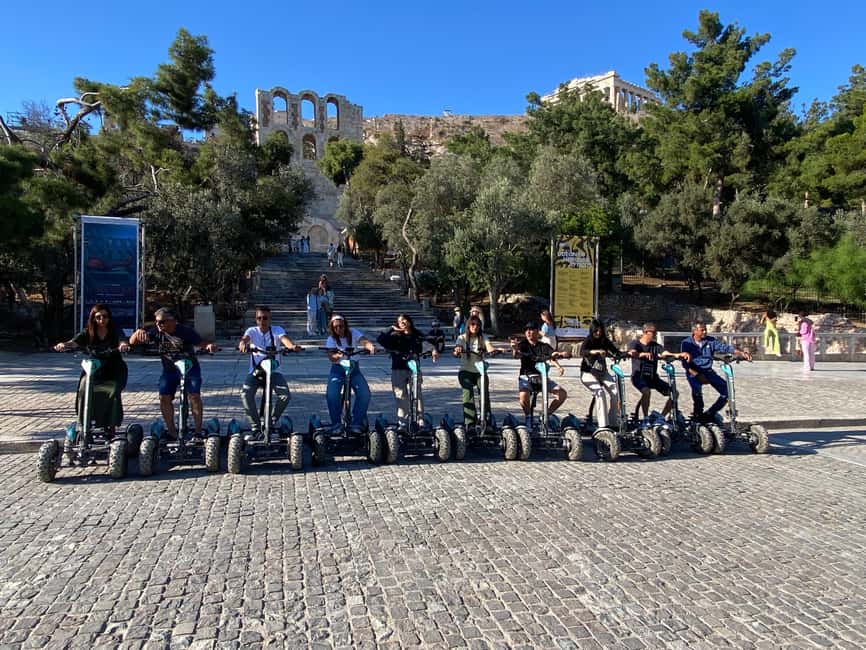
Before reaching Monastiraki Square, the route passes the flea market. This section shifts the mood from classical ruins to everyday urban Athens. You may see shops and stalls selling antiques, souvenirs, and local goods, though the tour itself is not a shopping trip.
Monastiraki is one of the city’s best-known meeting points, and passing through it shows how closely modern commerce sits beside ancient remains. It is also a lively area, so expect more street activity and less of the quiet found near the hills.
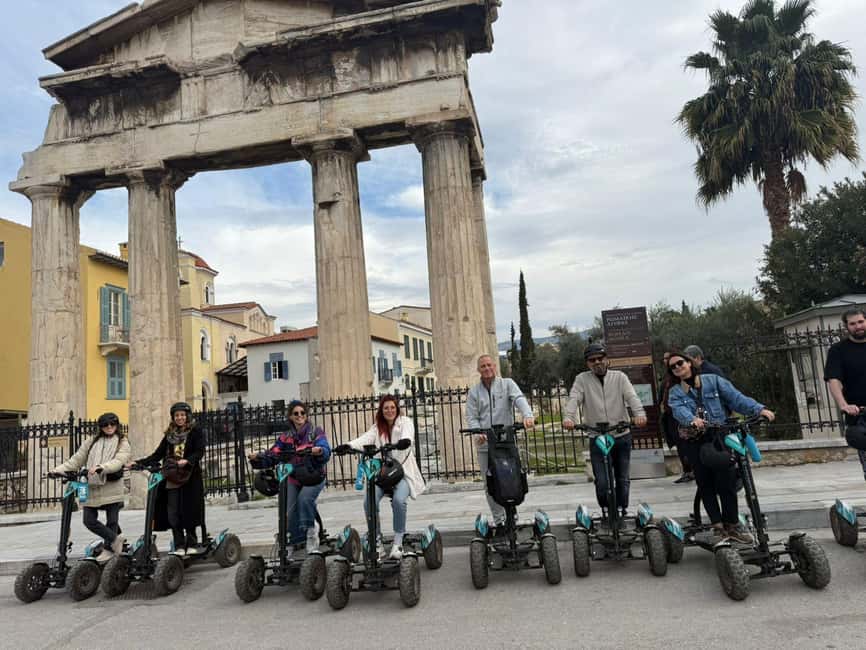
The route then goes by the Library of Hadrian and the Roman Agora. These monuments show how Athens changed under Roman rule. The city remained important, but its public buildings and political life developed over many centuries.
I like this part because it keeps the story from stopping with classical Greece. Athens is not only the age of Pericles and philosophers. Roman structures, later neighborhoods, markets, and modern streets all occupy the same small central area.
Again, you should expect to see these places from outside or during a short stop rather than receive a full interior visit. That is the price of fitting so much into two hours.
What the $58 price really covers
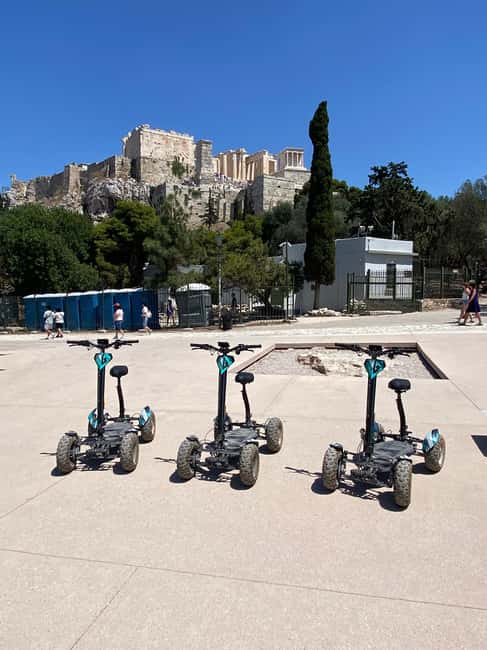
At $58 per person, the tour sits above the cost of a simple walking route, but the comparison is not quite fair. You are paying for an electric four-wheel scooter, a live guide, training, a helmet, insurance, water, WiFi, and a planned route through several major areas.
The price makes the most sense if you value time and energy. You can cover Plaka, the Acropolis area, Thissio, Keramikos, the Agora, Monastiraki, and the Roman sites without organizing your own route. You also receive explanations at places that can be confusing when viewed alone.
The value is lower if you mainly want long visits inside archaeological sites. Admission to the sites is not listed among the inclusions, and the two-hour schedule cannot allow extended exploration at each one. In that case, a walking tour or self-guided museum plan may suit you better.
The perfect transport score and overall 4.9 rating suggest the ride itself is a major strength, but you should still think about your priorities. This is a sightseeing circuit with historical stops, not a full-day archaeological tour.
Who will enjoy this ride most
I would recommend it to first-time visitors who want a quick map of central Athens. It is also useful for anyone who finds long city walks tiring or wants to see several neighborhoods before choosing where to return.
It suits adults and families with children aged eight and older, since children under eight are not accepted. The provided information does not give a maximum age, weight limit, or specific accessibility details, so ask the operator directly if any of those points matter to you.
The tour should appeal to anyone who likes a little motion with their history. You are not sitting in a coach, and you are not walking from ruin to ruin. You are actively moving through the city, with photo stops and short breaks for water.
It may not suit you if you dislike traffic, want a slow archaeological study, or expect every guide to deliver the same style of commentary. The one negative account about a boring guide is worth taking seriously, even though the broader response is very positive.
Languages, comfort, and practical planning
Guides are available in English, Spanish, and Hebrew. The tour is limited to 10 people, which is a useful size for a city ride. A small group should make it easier to hear the guide, ask questions, and stay together at stops.
Wear comfortable clothes and shoes suitable for short walks at historic sites. The operator supplies helmets and water, but you should still plan for sun and warm conditions in Athens. The exact starting times vary, so check availability for your date.
Free cancellation is available up to 24 hours before the tour for a full refund. You can also reserve now and pay later, which helps if your Athens schedule is still changing.
My call: book it for the overview, not the excavation
Book this tour if you want a fun, efficient introduction to ancient Athens and like the idea of moving through the city on an electric ATV. The strongest reasons are the thoughtful route, the views from Areopagus and Pnyx, the small group, and the chance to connect the major sites without exhausting yourself.
I would not book it as your only archaeological sightseeing. Use it to get oriented, then return to the Acropolis, Ancient Agora, Keramikos, or Pnyx with more time if those places interest you.
The guide matters. Bill and Demi have been praised for clear, friendly help, while one rider found the presentation uninteresting. If you can choose a language or guide option, do so carefully. For $58, this is a good-value city overview with a memorable mode of transport, provided you understand that the stops are brief.
FAQ
Where does the Ancient Athens Electric ATV Scooter Tour begin?
The tour begins in the Plaka neighborhood, Athens’ oldest and most picturesque district.
How long does the tour last?
The tour lasts two hours.
How much does the tour cost?
The listed price is $58 per person.
What type of vehicle do I ride?
You ride a MIA electric four-wheel ATV scooter.
Is training provided?
Yes. Training is included before the ride begins.
Is a helmet included?
Yes. A helmet is included.
Are insurance and water included?
Yes. Insurance and water are included, along with WiFi.
Which languages are available?
Live guides are available in English, Spanish, and Hebrew.
How many people can join the group?
The tour is limited to 10 participants.
Can children under eight join?
No. The tour is not suitable for children under eight.
Can I cancel for a refund?
Yes. You can cancel up to 24 hours in advance for a full refund.
Just added around Athens
- GoPro Adventure Tour in Acropolis area by E-Scooter★ 4.5 · 8 reviews
- 10 Days Tour Walk Athens Cycle Peloponnese Scooter Santorini★ 5.0 · 4 reviews
- Modern Athens Electric ATV Scooter Tour★ 5.0 · 4 reviews
- Best of Athens Electric ATV Scooter Tour★ 4.3 · 5 reviews
- Athens by Night Electric ATV Scooter Tour★ 5.0 · 2 reviews
- Athens: Guided City Tour on an Electric Trikke Scooter★ 4.4 · 7 reviews
- GoPro Adventure Tour in Acropolis area by E-Scooter★ 4.9 · 19 reviews
- Athens: Premium Guided E-Scooter Tour in Acropolis Area★ 5.0 · 133 reviews
Athens Scooter Tours, compared.

Athens Acropolis Official E-Scooter Guided Tour Fat E-Bike
Read our review →
Premium Guided E-Scooter Tour in Acropolis Area
Read our review →Premium Guided E-Scooter Tour in Acropolis Area
Read our review →
GoPro Adventure Tour in Acropolis area by E-Scooter
Read our review →GoPro Adventure Tour in Acropolis area by E-Scooter
Read our review →
Browse the lists this tour appears in