
Review · BANGKOK SCOOTER TOURS
Electric Scooter Tour of Bangkok
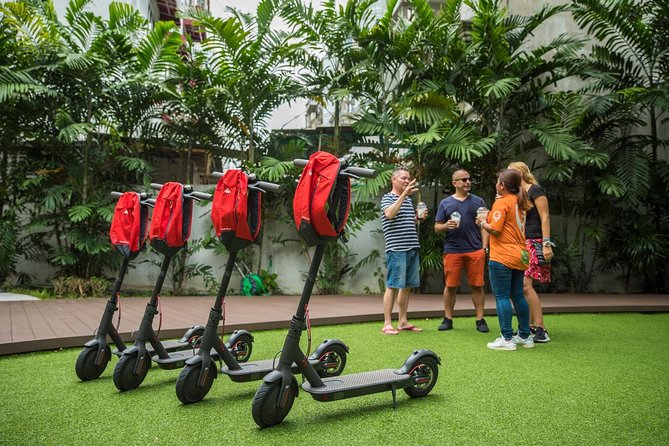
Bangkok looks different from an electric scooter. You slip through old neighborhoods and narrow lanes that a bus cannot reach, rolling from Bang Rak and Talad Noi toward temples, markets, Chinatown, and the river. I like the tiny group limit of three, and I like that the route includes a ferry crossing and a real break with snacks and a drink. The experience feels more like a moving neighborhood visit than a standard city loop.
The main caution is that the tour depends heavily on the guide. One guest found the commentary too thin, while another praised Nic for being adaptable and informative. You also need to be comfortable on a scooter, wear proper temple clothing, and allow extra time at the start for practice and safety instructions.
Key points at a glance
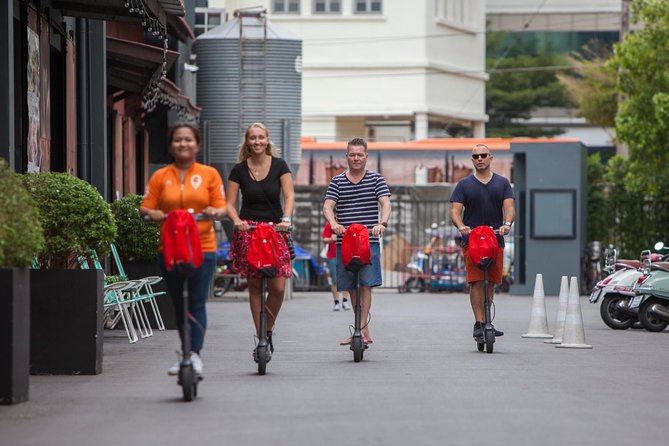
- Three-person maximum: You get a small group and more room for questions than on a large bus tour.
- Bangkok beyond the main roads: The route uses footpaths, back lanes, market areas, and old communities.
- A useful mix of sights: Expect mosques, churches, Chinese and Portuguese neighborhoods, temples, street art, flowers, and river travel.
- Scooter training comes first: You practice in Bang Rak before setting off, which can take close to an hour on some departures.
- The river crossing is part of the fun: A local ferry carries you from the flower market to Wat Kalayanamit.
- Good extras for the price: Your fee includes a helmet, bottled water, snacks, coffee or tea, a guide, and insurance.
Why an electric scooter works so well in Bangkok
Bangkok is too spread out for a walking tour and too crowded for a relaxed bus ride. An electric scooter gives you a middle ground. You cover more ground than on foot, but you still see the small details: painted walls, old shopfronts, shrines, market stalls, and lanes where a full-sized vehicle cannot go.
The tour begins in Bang Rak, one of Bangkok’s oldest districts. This is a practical starting point because you first learn how the scooter handles in the market area. You are not simply handed a scooter and sent into traffic. The guide works with you until you are ready to ride safely.
That training is important, but it affects the timing. The advertised duration is about three hours, and the route itself includes many short stops. A longer practice session can take close to an hour, leaving less time for sightseeing. If you are new to electric scooters, that trade-off is worthwhile. If you already ride confidently, you may want to ask how much training time your departure is likely to need.
The group limit of three is one of the tour’s best features. Your guide can adjust the pace, explain a detail without holding up a large crowd, and help if you need another turn around a quiet area. The small format also matters on narrow lanes and at busy markets, where a line of scooters would be awkward.
More Electric Scooter Tours in Bangkok:
- Bangkok: E-Scooter Night Tour with Local Street Food
★ 4.8 · 488 reviews - Bangkok: Bang Kachao E-Scooter Jungle Tour
★ 4.8 · 154 reviews - Bangkok: Riverside E-Scooter Adventure with StreetFood Snack
★ 4.9 · 133 reviews
From Bang Rak to the Grand Postal Building
Your first proper stop is the Grand Postal Building, a former post office now used as a cultural center. The visit is short, only about five minutes, so think of it as a quick look at Bang Rak’s changing identity rather than a full museum stop.
The building helps set the tone for the tour. Bangkok’s older districts are not preserved as frozen monuments. Former working buildings now serve new community purposes, while nearby markets and religious sites continue their daily routines. You will see that mix repeatedly during the ride.
From there, the route reaches Haroon Mosque, one of Thailand’s early mosques. It sits within an old community and is also associated with local roti. The stop lasts only about two minutes, so you should not expect a long visit or a detailed architectural tour. Still, it is a useful reminder that Bangkok’s older neighborhoods have long included Muslim communities alongside Buddhist, Chinese, Christian, and Hindu residents.
Dress matters here and at the temples later in the day. Choose clothing that covers your shoulders and knees, and avoid treating the scooter as a reason to dress only for heat. Bangkok is hot, but respectful clothing will make the religious stops easier.
Talad Noi’s wall art and old communities
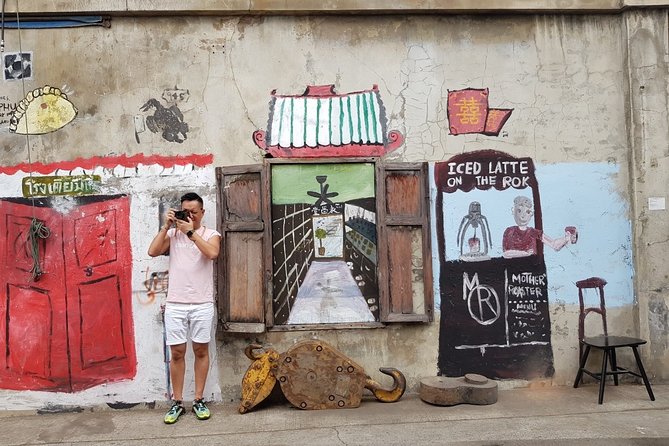
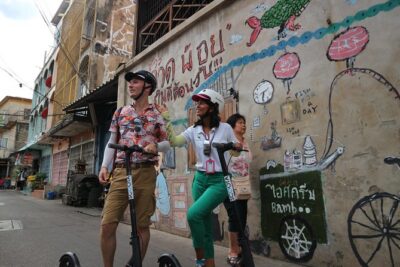
Talad Noi gives you more time to get off the scooter and look around. The planned stop is about 20 minutes, with a focus on wall art, back streets, an early church, and Siam Commercial Bank, described as Thailand’s first bank.
This is the sort of neighborhood where the scooter earns its keep. You can cruise through smaller lanes, pause for a painted wall, and continue without the long walks required by a conventional city tour. The appeal is not one grand sight. It is the way old homes, street art, religious buildings, and working neighborhoods sit close together.
The route then passes through Bangkok’s Chinatown. This section is more of a ride than a long stop. Chinatown is a maze linking several parts of the city, with food and shopping at nearly every turn, but the tour does not promise an extended tasting session or free time for browsing.
That is both a plus and a limitation. You get a quick sense of the area without using the whole afternoon, but you will not have time to explore Chinatown at your own pace. If food is your main reason for visiting Bangkok, plan to return later with an empty stomach and more time.
Crocodiles and the old temple quarter
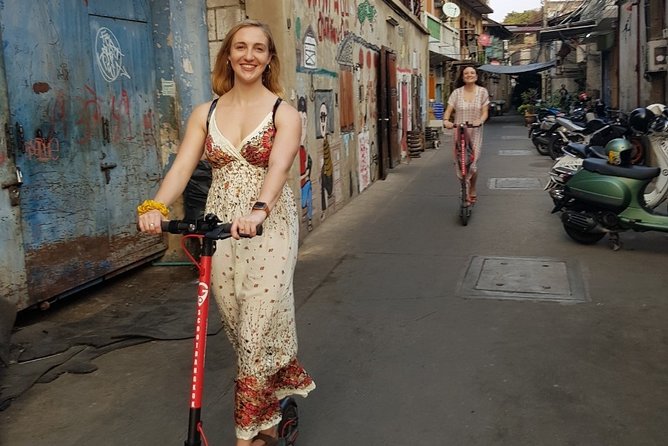
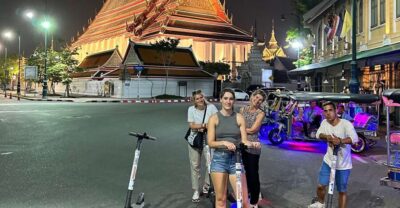
Wat Chakrawatrachawat Woramahawihan dates from the 1800s and is known for its crocodiles. The animals were originally kept there as a way to protect them from being captured and killed by river traders.
The stop lasts about ten minutes. It is an unusual detail that gives the temple a story beyond the usual golden roof and Buddha image. You should expect a short visit rather than a long religious or architectural lesson, so listen closely when the guide explains the crocodile connection.
This part of the route also shows why local commentary matters. Without explanation, a temple with crocodiles may simply seem strange. With context, it becomes a window into older river life and the efforts made to protect animals that once faced pressure from trade.
A few more scooter tours around Bangkok worth a look
- Bangkok at Night by Electric Scooter
★ 5.0 · 53 reviews - Bangkok By Night by Electric Scooter &/or Bike
★ 4.6 · 40 reviews - Explore Bangkok by E-Scooter & Try Street Food
★ 5.0 · 40 reviews - Bangkok : Old City Guided E-Scooter &/or Bike Tour
★ 4.7 · 29 reviews
Pak Khlong Flower Market and the river ferry
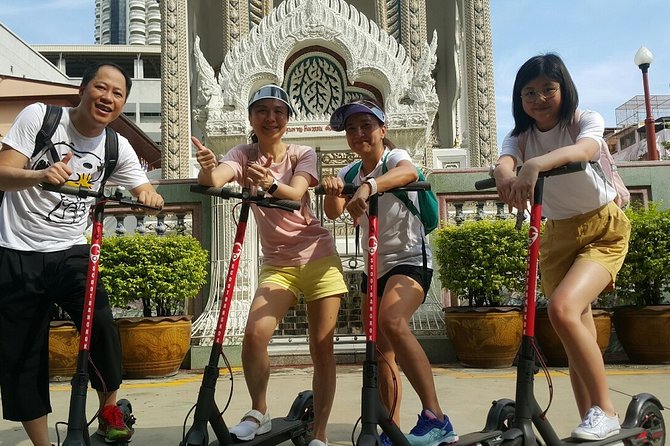
Pak Khlong Flower Market is Thailand’s largest wholesale market for flowers, spices, and vegetables. It operates around the clock, but the main flower-selling streets become livelier in the evening.
The scheduled stop is about ten minutes. That gives you enough time to take in the colors and smells, but not enough for a leisurely market wander. If you want to browse every stall or shop for flowers, you will need to return on your own. The tour uses the market as part of a wider route rather than treating it as the day’s main attraction.
From the flower market, you cross the river by ferry to Wat Kalayanamit Woramahawihan. This is one of the most appealing parts of the experience. The ferry is not a scenic cruise arranged for tourists. It is a practical piece of local transport that connects the two sides of the city and breaks up the scooter ride.
Wat Kalayanamit is known for a very large seated Buddha and one of Thailand’s biggest bells. The temple stop lasts about 15 minutes, giving you time to look around and hear about Buddhist customs. You should be ready to remove your helmet and follow temple etiquette, and your clothing should already meet the stated temple dress code.
Baan Kudichin and Bangkok’s Portuguese connection
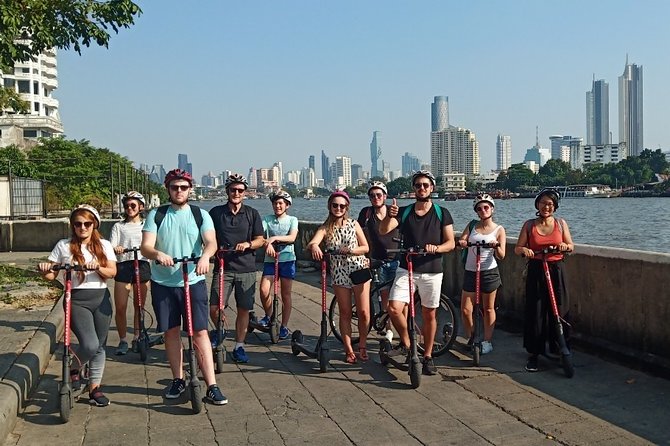
Baan Kudichin is a Portuguese settlement with a museum, coffee shops, and a bakery known for cookies based on a recipe introduced more than 200 years ago. The tour allows about 20 minutes here, making it one of the more substantial stops.
This is a fine place to slow down. After weaving through city lanes and crossing the river, you get a chance to sit, look around, and sample the character of a long-established community. Coffee shops and the bakery add a simple pleasure that many sightseeing routes miss.
The Portuguese connection also broadens your view of Bangkok. The city is not only royal palaces, Buddhist temples, and Chinese trading streets. Smaller communities have left their mark on food, religion, buildings, and daily life. Baan Kudichin gives that idea a clear, human scale.
There is another stop located within the Portuguese settlement, but the information provided does not specify its name or length. You should treat it as part of the neighborhood visit rather than count on a separate major attraction.
Optional stops and the end of the route
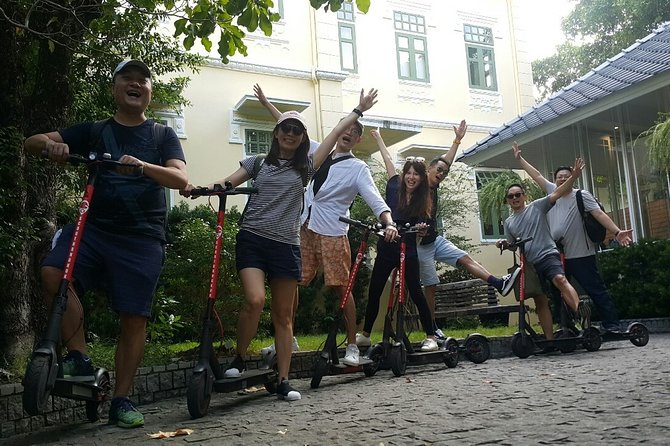
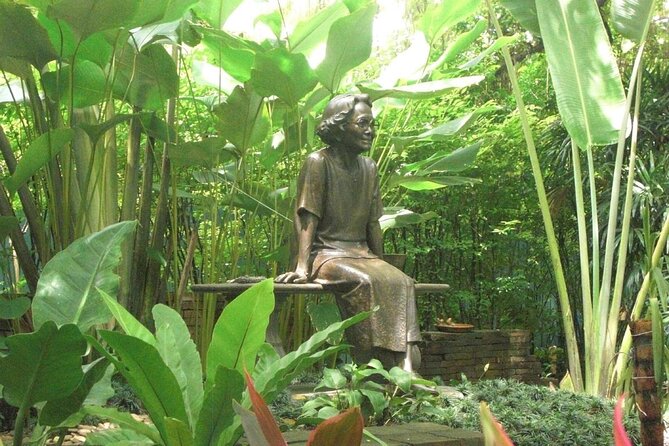
If time permits, the guide may stop at a park dedicated to the mother of King Rama IX. Lhong 1919 is also listed as a possible stop. This former Chinese immigrant site is now a complex with restaurants, shops, and old murals.
The phrase if time permits matters. The tour has many stops, practice time, riding time, and a ferry crossing, so these additions may not happen on every departure. You should see them as bonuses, not the core reason to book.
Lhong 1919 could be especially appealing if you like restored waterfront areas and Chinese heritage. At the same time, restaurants and shops are not the same as a guided historical visit. Your guide’s explanation will determine how much you get from the stop.
The tour ends back at the Bang Rak meeting point. Hotel pickup and drop-off are not included, so build your own transport time into the day. The starting point is Thai Cooking School at 69, 2 Soi Charoen Krung 44, in Bang Rak, and the meeting area is near public transport.
What the $36.58 price really covers
At $36.58 per person, this is fairly priced for a three-hour private-feeling outing, especially with a maximum of three people. The value comes from the range of transport and access: scooter use, a ferry crossing, guided stops, and routes that would be hard to link together efficiently on your own.
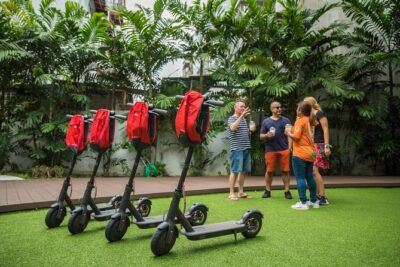
You also receive a helmet, bottled water, snacks, coffee or tea, and insurance. Those extras are modest, but useful in Bangkok’s heat. A drink and a break at the end can make a real difference after several hours outside.
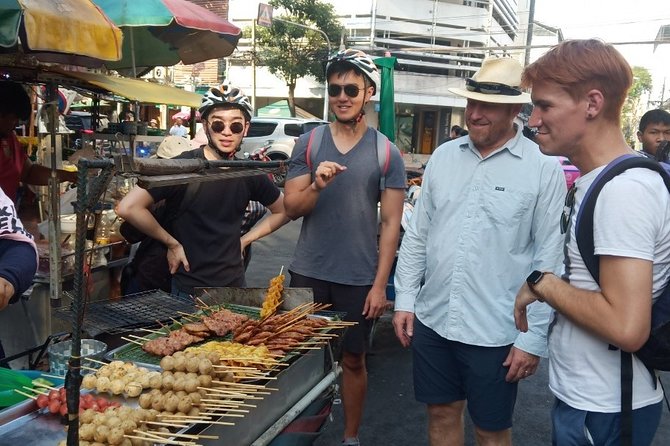
The price does not include alcohol, hotel pickup, or hotel drop-off. You also should not book it as a food tour. You pass through Chinatown, Haroon Mosque’s local food area, and the flower market, but the main product is neighborhood touring by scooter.
The value is strongest for someone who wants orientation and local context in a short time. It is less compelling if you want long museum visits, a slow market breakfast, or a full afternoon at each temple.
Guide quality, safety, and comfort
A good guide is central to this experience. One departure was led by Nic, who adjusted the route and pace well for the group. Another guest found the guide too quiet and received little explanation about the places along the way.
That difference is worth taking seriously. The route has plenty to look at, but the buildings and communities will mean more when someone explains what you are seeing. At the start, tell your guide what interests you, ask questions, and make it clear if you want more context at each stop.
The tour includes a helmet and insurance, and the initial practice session is designed to make sure you can control the electric scooter. The minimum age is 12, or a height of at least 140 centimeters. The stated maximum weight is 120 kilograms.
Most people can take part, and service animals are allowed. Still, the activity requires you to balance, steer, stop, and ride through city spaces. If you feel unsure during practice, say so before leaving Bang Rak. Safety is more important than squeezing in one extra stop.
The morning or afternoon departure gives you some scheduling choice. Market conditions and the flower market’s evening trade may feel different depending on your time slot, but the provided details do not guarantee a particular market atmosphere for either departure.
Who should book this Bangkok scooter tour?
I would choose this tour if you want to see several sides of Bangkok without spending half the day in a bus. It suits confident riders, curious first-time visitors, couples, friends, and small families with children who meet the age or height rule.
It is particularly good for you if narrow lanes, old communities, street art, temples, food smells, and local transport sound more appealing than checking off only the biggest monuments. The route gives you a useful sense of how Bang Rak, Talad Noi, Chinatown, the river, and Thonburi fit together.
I would hesitate if you dislike scooters, need a slow walking pace, or want a guide who gives a long explanation at every stop. The many short visits keep the tour moving, but they can also feel rushed. The guide’s speaking style will shape your experience more than the route map does.
Cancellation is free if you cancel at least 24 hours before the local start time. Within 24 hours, the payment is not refunded, and changes are not accepted.
Final call: a smart way to see the city’s side streets
Book this tour if you want a compact, active introduction to Bangkok’s older communities and are happy to trade depth at each stop for variety. The small group, scooter access, ferry crossing, and mix of mosques, temples, markets, wall art, and Portuguese and Chinese heritage give you far more range than a standard road tour.
Before booking, check your clothing, your comfort on a scooter, and your route to Bang Rak. Ask at the start for clear commentary and enough practice time. If the guide matches the strengths shown by Nic, this can be a memorable and good-value way to reach parts of Bangkok you might otherwise miss.
FAQ
How long is the electric scooter tour?
The tour lasts approximately three hours.
Where does the tour start and finish?
It starts at Thai Cooking School, 69, 2 Soi Charoen Krung 44, Bang Rak, Bangkok. It ends back at the same meeting point.
How many people can join the tour?
The group is limited to a maximum of three participants.
Is scooter training included?
Yes. You practice using the electric scooter in the Bang Rak market area before the guide considers it safe to begin the route.
What age or height rules apply?
Participants must be at least 12 years old or at least 140 centimeters tall. The stated maximum weight is 120 kilograms.
What is included in the price?
The price includes a professional or local guide, helmet use, bottled water, snacks, coffee or tea, insurance, and all listed taxes and handling charges.
What should I wear for the tour?
You should wear temple-appropriate clothing. The tour visits several religious sites, so clothing covering the shoulders and knees is the practical choice.
Just added around Bangkok
- Vintage Scooter Bangkok Tour on Weekday (City Route)★ 5.0 · 2 reviews
- Bangkok by Night with Escooter &/or Bike★ 4.5 · 4 reviews
- Bangkok Classic E-Scooter &/or Bike Trip★ 5.0 · 6 reviews
- Take a E-Scooter Ride in Bangkok’s Jungle★ 5.0 · 11 reviews
- Bangkok: City Highlights Electric Scooter Tour★ 4.8 · 15 reviews
- Bangkok: Street Art e-Scooter Tour of Chinatown★ 4.8 · 7 reviews
- Electric Scooter Tour of Bangkok★ 5.0 · 21 reviews
- Bangkok : Old City Guided E-Scooter &/or Bike Tour★ 4.7 · 29 reviews
Bangkok Scooter Tours, compared.
Riverside E-Scooter Adventure with StreetFood Snack
Read our review →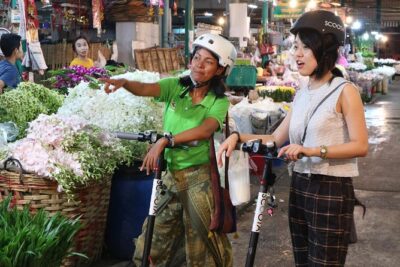

Browse the lists this tour appears in