
Review · ATHENS SCOOTER TOURS
Athens Acropolis Official E-Scooter Guided Tour Fat E-Bike
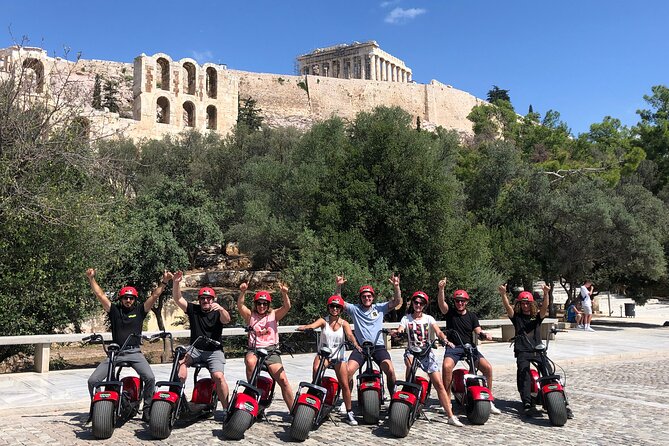
Athens becomes much easier to grasp when you roll between its ancient monuments instead of trudging from one crowded site to the next. This two-hour ride uses fat-tire electric bikes to connect Mars Hill, the Pnyx, Gazi, the Temple of Hephaistos, and the great temples near the Acropolis.
I like the small-group attention and the way the guides keep the pace calm in busy streets. I also like the route’s mix of famous landmarks and less obvious stops, including the Pnyx and National Observatory. The main consideration is simple: you need to know how to ride a bicycle, and the tour does not replace a ticketed visit inside the Acropolis.
- Fat-tire e-bikes make Athens easier on your legs, especially after several days of walking.
- Guides such as Venice, Giannis, Nick, and Celina add context at each short stop.
- The route includes both major monuments and quieter viewpoints, including the Pnyx and St. Marina Church.
- Safety receives steady attention on crowded streets and around cars, scooters, and pedestrians.
- One-seated and two-seated eco-scooter options are available, with a passenger arrangement possible in some cases.
- The $71.35 price covers about two hours, bikes, helmets, bottled water, and guiding, but not entry into archaeological sites.
Why a Fat E-Bike Works Well in Athens

Athens is a walking city, but it is not always an easy walking city. The Acropolis rises above the center, streets can be crowded, and the distance between the main monuments adds up quickly. A fat-tire electric bike gives you a bit of help on the hills and lets you cover more ground without turning the day into a marching exercise.
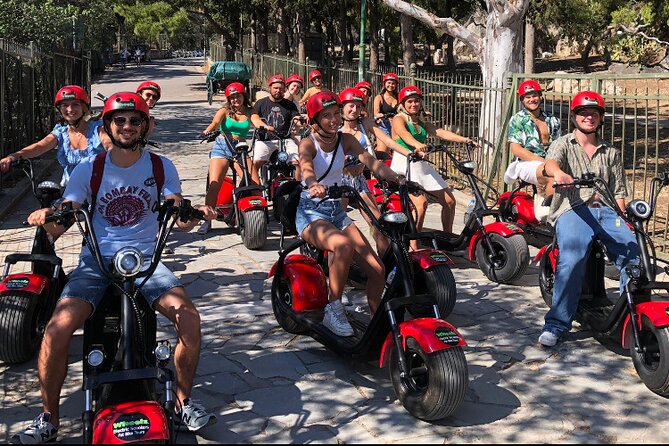
The bikes are described as smooth and easy to maneuver, with a leisurely pace designed for safety. That does not mean you can switch off completely. You will ride near pedestrians, cars, motorbikes, and narrow or busy streets, so you need basic bicycle control and a willingness to follow the guides closely.
The tour uses a lead-and-follow approach when there are two guides. One guide rides in front while the other brings up the rear, helping keep the group together. That matters in Athens, where a short gap can open quickly at a crossing or crowded sidewalk.
The fat tires also make the bikes feel more stable than a narrow city bicycle. Still, the machine is not a substitute for balance or road awareness. If you have never ridden a bicycle, this is not the right activity unless the operator can arrange a passenger position for you.
Meeting Near the Acropolis on Chatzichristou Street
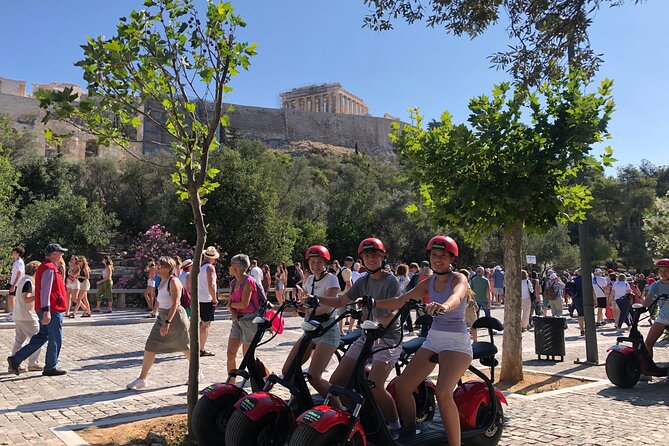
The tour starts at Chatzichristou 6, Athens 117 42, close to the Acropolis area and public transportation. Give yourself enough time to find the exact shop and meeting point. One rider specifically found the location difficult to identify because the business name was Wheelz, so check the confirmation details and look for the Wheelz Fat Bike Tours name rather than relying only on the tour title.
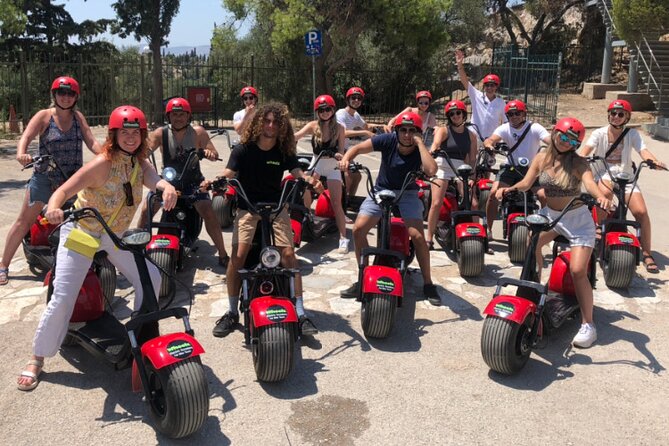
At the start, you receive the bike and helmet, and bottled water is included. The guides then help organize the group before setting off. The maximum group size is 25 people, though the experience is promoted as a small-group activity. If you want the most personal attention, a smaller departure will naturally feel easier than a full one.
The tour is offered in English. Guides mentioned by name include Venice, Giannis, Nick, Iannis, Celina, and Nicolas, though the exact guide depends on the departure. Their role is not just to lead the bikes. They explain the places you pass, answer questions, watch the road, and help nervous riders settle into the equipment.
More Electric Scooter Tours in Athens:
- Athens: Award-Winning Acropolis Guided e-Scooter Tour
★ 5.0 · 637 reviews - Athens: City Highlights Guided E-Scooter Tour
★ 5.0 · 277 reviews - Athens: Premium Guided E-Scooter Tour in Acropolis Area
★ 4.9 · 264 reviews
Herod Atticus Odeon and Mars Hill
The first stop is the Herod Atticus Odeon, the dramatic stone theater tucked below the Acropolis. The stop is listed as a five-minute photo stop, so expect a quick orientation rather than a full archaeological lecture or entry visit.
That short pause is useful because the Odeon gives you an immediate sense of how Athens layers ancient buildings into the modern city. You can take photographs, hear the basic story of the site, and then move on without spending the whole morning in one place.
Next comes Areopagus, also called Mars Hill. This rocky rise is closely tied to Athenian public life and offers a different view toward the Acropolis. Again, the listed stop lasts about five minutes. Treat it as a viewpoint and history lesson, not as a long climb or extended exploration.
The quick timing is one of the tour’s strengths and limits. You get a broad survey of Athens, but you will not have much time to linger at every site. If your priority is detailed archaeology, plan a separate visit to the Acropolis and its museums.
The Pnyx and the National Observatory
The Pnyx is one of the most rewarding stops on the route because it is less obvious than the Acropolis itself. This open hillside is associated with the democratic assembly of ancient Athens. The setting helps you understand that Athens was not only a collection of temples. It was also a place where citizens gathered, argued, and made public decisions.
The tour allows about ten minutes here, longer than at most other stops. That extra time gives you a chance to look across the city and listen to the guide explain why the site matters. You might also appreciate the breathing room after riding through busier streets.
The National Observatory of Athens follows as a five-minute photo stop. From this area, the city opens out in several directions, and the observatory adds a more modern scientific layer to the ancient setting. You will not be taking an observatory tour during this activity, but the stop adds another useful angle to Athens.
These two locations show why the route is more than a simple circuit of famous ruins. The Pnyx offers civic and political context, while the observatory connects the old city with Athens as a center of modern study.
St. Marina Church and the Ride Toward Gazi
St. Marina Church is another brief photo stop. The church gives the route a religious and local character that the larger monuments cannot provide. You will stop for about five minutes, hear some explanation, and continue.
Several sections of the route are listed as pass-through points rather than formal stops. That means you will see more than the named locations, but you should not expect to dismount and receive a full explanation at every building or street. The moving sections are what make it possible to cover such a wide part of Athens in only two hours.
The ride then reaches Gazi, where the tour pauses at a viewpoint. Gazi is known for its former industrial character and changing city life, but the supplied tour details do not promise an extended neighborhood walk. Think of this as a look across Athens from a different angle, with the bikes allowing you to reach the area quickly.
I like this change of mood. The route does not stay locked inside the ancient center. You get glimpses of the wider city, which helps place the Acropolis among working neighborhoods, traffic, apartments, and everyday Athens.
More E-Bike Rides in Athens:
- Santorini Tour on Electric Bikes & Scooters
★ 5.0 · 214 reviews - From Corralejo: Fuerteventura Guided E-Bike/E-scooter Tour
★ 4.8 · 209 reviews - Prague: E-Bike or E-Scooter Tour with A Local Guide
★ 4.8 · 154 reviews - Prague: E-Bike/E-Scooter Viewpoint Tour
★ 4.9 · 120 reviews
The First Cemetery and the Temple of Hephaistos

The First Cemetery of Athens is listed as a five-minute ceramics stop. Its monuments and sculpture provide a quieter contrast to the ancient temples. You should expect a short look rather than a long cemetery tour, but the stop gives the guide room to explain a different side of Greek art and memory.
Because the stop is brief, listen for the details that interest you and ask questions while you have the guide nearby. A short guided visit can still be worthwhile when it points out features you might otherwise pass without understanding.
The Temple of Hephaistos is one of the tour’s major stops. It is often described as the best-preserved temple in Greece, and its condition makes it particularly valuable for a first look at classical architecture. You can see the form of the temple clearly, without needing to imagine as much of the original structure.
The stop is listed at five minutes, so do not confuse it with a full visit to the archaeological area. You will pass through or pause near several sites, but admission tickets are not included in the information provided. The value here is the guide’s explanation and the chance to see the monument efficiently from the outside.
Hadrian’s Arch and the Temple of Olympian Zeus
The route continues to Hadrian’s Arch, another five-minute photo stop. The arch marks the transition between older Athens and the Roman expansion of the city. It is an easy place to photograph and a useful point for understanding that Athens continued to change long after the classical period.
The Temple of Olympian Zeus follows. This enormous temple complex gives you a sense of scale that smaller ruins cannot match. Even a short stop lets you appreciate the size of the columns and the ambition behind the project.
The tour passes several points between its formal stops. You will not receive an hour-long explanation at each monument, but you will see a broad collection of important places in one compact outing. That makes the route especially useful near the start of your Athens stay, when you want to learn how the city fits together before returning to selected sites on foot.
The activity ends back at the original meeting point. That makes it easier to continue with your day in the Acropolis area, assuming you have not already made other fixed plans.
What the Two-Hour Timing Really Means
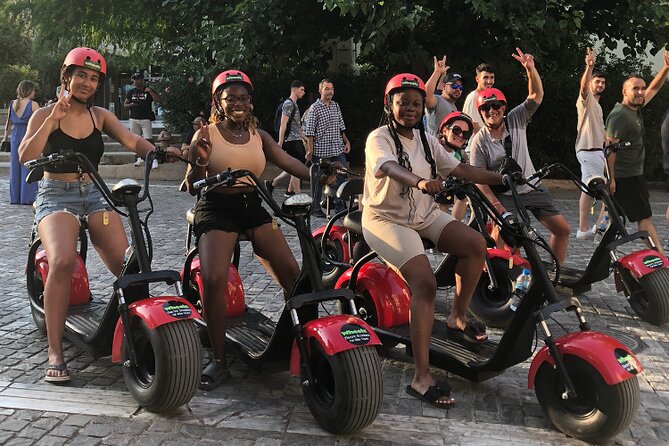
Two hours is a good length for a first orientation. It is long enough to reach several districts and viewpoints, but short enough to fit before lunch, after a museum visit, or on a day when you have other plans.
The timing also explains the format. Most stops last five minutes, with ten minutes at the Pnyx. You will take photographs, listen to a compact explanation, and get back on the bike. If you want extended time at the Temple of Hephaistos, the First Cemetery, or the Temple of Olympian Zeus, you will need to return independently.
The pace is described as fairly slow, which helps with safety and makes it easier to hear the guide. It can feel a little awkward when pedestrians fill the route or when traffic passes nearby. The guides’ practice of leading and following the group helps, but you should still expect normal city riding rather than a closed cycling path.
The tour is offered in English only. That is important if you are comparing it with a multilingual option.
Family Suitability and Riding Ability

This can work well for families. Children and teenagers have taken part, and a 10-year-old was able to ride independently during one outing. However, the supplied information does not state a formal minimum age, so confirm the details for your own booking.
You must know how to ride a bicycle to use the bikes. That requirement is easy to overlook because the electric assistance makes pedaling easier, but it does not remove the need to steer, balance, brake, and react to city traffic.
A person who is nervous on bikes may still enjoy the ride if given enough help at the start. One arrangement allowed a child who could not ride to sit behind the guide, so ask the operator about passenger options before booking. One-seated and two-seated eco scooters are available, but the exact setup for your party should be confirmed in advance.
The ride suits adults who want a break from walking, families with confident young riders, and anyone who prefers an active introduction to Athens. It is less suitable for someone seeking a slow, detailed archaeological tour with long time at each monument.
Safety, Comfort, and Weather
Safety receives repeated attention during the ride. The guides keep the pace controlled and help the group move through crowded areas. Helmets are provided, and bottled water is included, which is welcome in Athens’ warm months.
The bikes are described as comfortable and easy to handle, but comfort depends on your confidence in city riding. You may pass pedestrians and occasional vehicles, so stay alert and follow the guide’s instructions. The route is not presented as a traffic-free ride.
Weather matters. The activity requires good conditions, and poor weather can lead to a new date or a full refund. That policy is useful because wet streets can make a bike tour less pleasant and less safe. If rain is forecast, keep your schedule flexible. One group successfully moved part of its booking to another day after heavy rain made the original departure unsuitable.
Free cancellation is available up to 24 hours before the start time for a full refund. Changes or cancellations inside that window are not accepted under the stated policy.
Is $71.35 a Fair Price?
At $71.35 per person, this is not the cheapest way to see Athens, but the value depends on how much walking you want to avoid. The price includes the bike, helmet, bottled water, guide, and a route linking many separate locations in roughly two hours.
You are paying for transport between sights as well as interpretation. If you tried to cover the same ground on foot, you would spend more energy and probably more time. The bike also gives you access to viewpoints and districts that are easy to skip when you stay close to the main Acropolis paths.
The price does not appear to include entry to the Acropolis, the Temple of Hephaistos, or other archaeological sites. That is not a problem if you see this as an exterior sightseeing tour, but it matters if you expect an official guided visit inside the Acropolis. Book a separate ticket and allow extra time for that.
For a first or second day in Athens, I consider the price reasonable if you value a broad overview, active transport, and a guide who can answer questions. If you already know the city well or want slow visits at each ruin, the value is weaker.
Who Should Book This Athens E-Bike Tour?
Book it if you want to cover a lot of Athens without spending another half-day on foot. It is especially useful after several walking tours, when your knees need a break but you still want to see the city.
I would also choose it for families with confident bicycle riders, couples who want something more active than a bus tour, and first-time visitors who enjoy learning while moving. The route gives you a helpful mix of famous monuments, viewpoints, churches, cemeteries, and city neighborhoods.
Think twice if you dislike riding near traffic, cannot ride a bicycle, or want long, detailed visits inside archaeological sites. This is a moving overview with short stops, not a replacement for the Acropolis, museum, or Ancient Agora experience.
Should You Book It?
You should book this tour if you want a fun, efficient introduction to Athens and you are comfortable on a bicycle. The strongest reasons are the wide route, careful guide support, easy-to-use fat e-bikes, and access to places you might not reach during a normal walking day.
I would schedule it early in your stay. The guide’s explanations can help you decide which monuments deserve a longer return visit, and the ride gives you a useful sense of how the Acropolis area connects with Gazi, the Pnyx, Mars Hill, and the city beyond.
Book a separate archaeological visit if the Acropolis interior is your main goal. Choose this ride for the broader picture, the views, and the chance to see Athens with a little less strain on your feet.
FAQ
Where does the Athens e-bike tour start?
The tour starts at Chatzichristou 6, Athina 117 42, Greece.
Where does the tour end?
The activity ends back at the original meeting point.
How long does the tour last?
The tour lasts approximately two hours.
What language is the tour offered in?
The tour is offered in English.
Are bikes and helmets provided?
Yes. Bikes and helmets are provided as part of the experience.
Is bottled water included?
Yes. Free bottled water is provided.
Do I need to know how to ride a bicycle?
Yes. You need to know how to ride a bicycle to use the bikes.
Are passenger or two-seated options available?
Yes. One-seated and two-seated eco scooters are available. A passenger arrangement behind a guide may also be possible, so confirm the setup for your group before booking.
What happens if the weather is poor?
The experience requires good weather. If it is canceled because of poor weather, you will be offered another date or a full refund.
Just added around Athens
- GoPro Adventure Tour in Acropolis area by E-Scooter★ 4.5 · 8 reviews
- 10 Days Tour Walk Athens Cycle Peloponnese Scooter Santorini★ 5.0 · 4 reviews
- Modern Athens Electric ATV Scooter Tour★ 5.0 · 4 reviews
- Best of Athens Electric ATV Scooter Tour★ 4.3 · 5 reviews
- Athens: Guided City Tour on an Electric Trikke Scooter★ 4.4 · 7 reviews
- Athens by Night Electric ATV Scooter Tour★ 5.0 · 2 reviews
- GoPro Adventure Tour in Acropolis area by E-Scooter★ 4.9 · 19 reviews
- Ancient Athens Electric ATV Scooter Tour★ 4.9 · 29 reviews
Athens Scooter Tours, compared.


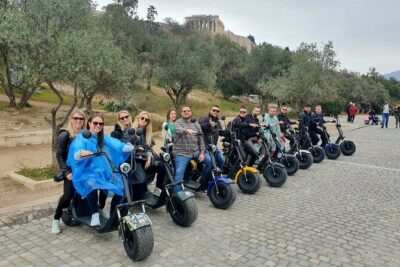
Premium Guided E-Scooter Tour in Acropolis Area
Read our review →Premium Guided E-Scooter Tour in Acropolis Area
Read our review →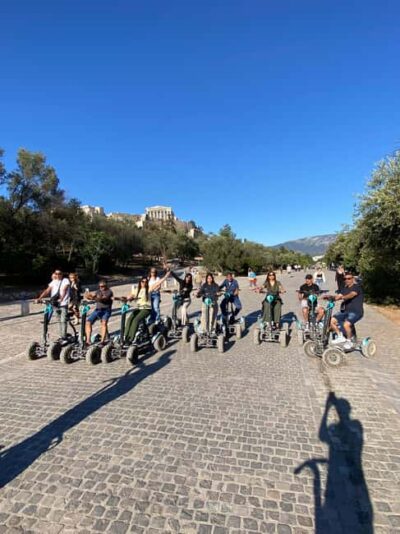
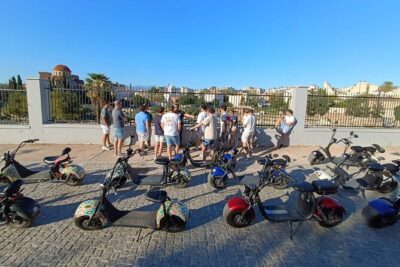
GoPro Adventure Tour in Acropolis area by E-Scooter
Read our review →GoPro Adventure Tour in Acropolis area by E-Scooter
Read our review →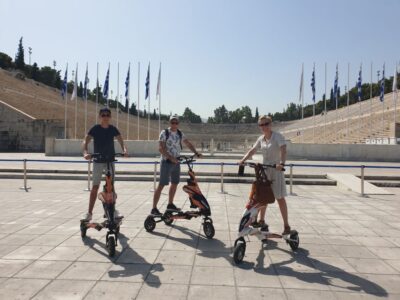
Browse the lists this tour appears in